Key takeaways
- Customer segmentation is the process of dividing customers into meaningful groups based on shared characteristics such as behavior, needs, demographics, or purchasing patterns.
- Businesses use segmentation to understand different customer groups better and deliver more relevant marketing, sales, and customer experiences.
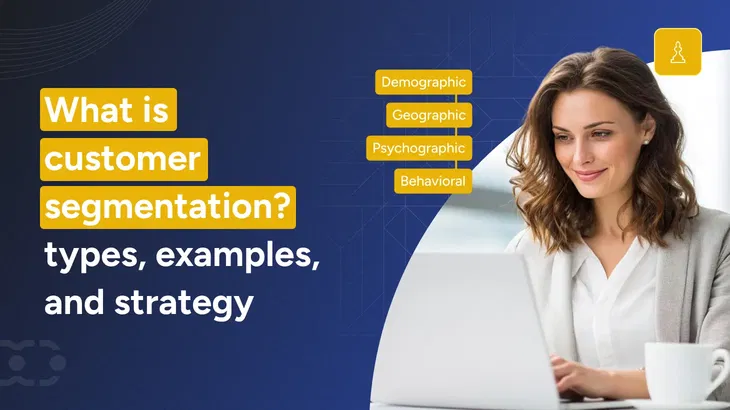
- Common segmentation approaches include demographic, geographic, psychographic, behavioral, and value-based segmentation.
- Modern CRM platforms and analytics tools help companies analyze customer data, build segments, and run targeted campaigns more efficiently.
- When used effectively, segmentation can improve marketing performance, customer retention, and long-term customer value.
Many businesses collect a large amount of customer data, but very few know how to use it effectively. When every customer receives the same message, and every lead is treated the same way, marketing and sales efforts quickly lose impact.
This is where customer segmentation becomes valuable.
Customer segmentation helps businesses organize their audience into meaningful groups based on shared characteristics such as behavior, needs, preferences, or purchase history. Instead of speaking to everyone in the same way, companies can focus on different customer segments and create more relevant experiences for each group.
For sales teams and marketers, this approach leads to clearer insights into customer behavior, better targeting across marketing channels, and stronger customer relationships over time.
In this guide, we’ll explain what customer segmentation is, explore the types of customer segments businesses can create, look at practical customer segmentation examples, and show how to segment customers using CRM data to improve marketing and sales results.
What is customer segmentation?
Customer segmentation is the practice of dividing your audience into distinct groups of people who share similar traits, behaviors, or needs so a business can communicate with them more effectively and deliver experiences that feel relevant rather than generic.
In simple terms, it means grouping customers based on meaningful patterns in their data. These patterns might include demographic details, buying behavior, geographic location, preferences, or how people interact with a product or service.
When businesses treat all customers the same, they often miss important differences in expectations and motivations. One group might care about pricing, another about product quality, while another values speed or service.
By organizing customers into specific customer segments, companies can adjust marketing messaging, sales strategies, and support experiences to match what different groups actually want.
Why do businesses segment customers?
Businesses segment customers because understanding differences in behavior helps them make better decisions.
For example, a loyal customer who buys frequently should not receive the same communication as someone who has never purchased before. A new lead exploring a product also needs a different experience than a long-term customer who already trusts the brand.
Segmenting customers helps businesses:
- Understand different customer behaviors and preferences
- Identify high-value customer segments
- Create more targeted marketing and sales strategies
- Improve customer experience across the entire customer journey
- Strengthen customer loyalty and retention
Research shows that customers increasingly expect personalized experiences. When companies fail to provide them, engagement drops, and customers are more likely to switch to competitors.
Customer segmentation vs. market segmentation
Customer segmentation is often confused with market segmentation, but the two ideas serve different purposes.
Market segmentation focuses on dividing the entire market into groups of potential buyers. It is usually used when a business is defining its target audience or entering a new market.
Customer segmentation focuses on existing customers and leads who are already interacting with the business. It relies on real data such as purchase history, behavioral data, and engagement signals.
| Market segmentation | Customer segmentation |
|---|
| Focuses on the broader market | Focuses on current and potential customers in your database |
| Often based on market research | Based on real customer data and behavior |
| Helps identify a target audience | Helps personalize communication and experiences |
| Used for positioning and demand generation | Used for sales, marketing, and retention strategies |
Because it relies on real customer data, customer segmentation often produces more actionable insights. Businesses can analyze how different customer segments behave, identify patterns, and adjust their marketing and sales strategies accordingly.
For modern teams, this process usually happens inside customer relationship management systems, where customer data, behavioral signals, and engagement history make it easier to segment customers and respond to their needs in a more meaningful way.
Also read: STP Marketing guide: Maximize your campaign impact in 2026
Why customer segmentation matters for revenue growth
Customer segmentation is not just a marketing exercise. When businesses organize their audience into meaningful groups, they can make better decisions about how they communicate, sell, and retain customers.
This often leads to measurable improvements in revenue, marketing efficiency, and long-term customer relationships.
Instead of treating the entire audience as one group, businesses can focus their efforts on specific customer segments with different needs, motivations, and behaviors. That level of focus makes marketing campaigns more relevant and sales strategies more effective.
Here are some of the most important benefits of customer segmentation.
1. Higher revenue through more relevant messaging
When companies tailor their messaging to different customer segments, the communication becomes more relevant. Customers are more likely to respond when an offer matches their interests or needs.
Research from McKinsey shows that businesses using personalization strategies driven by segmentation can achieve 10 to 15 percent revenue growth. Personalization works because customers feel that the company understands their preferences and expectations.
For example, a company might send different marketing messages to:
- first-time buyers
- repeat customers
- high-value customers
Each group receives communication that reflects its behavior and relationship with the brand.
2. Better performance across marketing campaigns
Segmentation improves the performance of marketing campaigns because messages are targeted rather than generic.
Studies consistently show that segmented campaigns outperform mass messaging. Businesses that segment customers often see:
- higher email open rates
- higher click-through rates
- stronger campaign engagement
When marketing teams understand how different segments behave, they can choose the right marketing channels, messaging style, and timing for each group.
3. Lower customer acquisition costs
Customer segmentation also improves how businesses spend their marketing budget.
Instead of running broad campaigns aimed at everyone, companies can target high-potential customers who are more likely to convert. This reduces wasted marketing spend and helps teams focus on the audiences most likely to respond.
Better targeting also improves advertising performance because campaigns reach people who match the intended audience more closely.
Insightful read: Calculating customer acquisition cost and understanding it
4. Increased customer lifetime value
Segmenting customers makes it easier to identify high-value groups and nurture them over time.
For example, businesses can use value-based segmentation to identify customers who purchase frequently or spend more than average. These customers can receive loyalty offers, exclusive benefits, or early product access.
When businesses recognize and reward valuable customers, it increases customer lifetime value and strengthens long-term relationships.
5. Stronger customer retention and loyalty
Customer retention improves when companies understand how different customers behave across the customer journey.
Segmentation helps businesses recognize signals such as declining engagement or reduced purchase activity. These signals allow teams to take action early by sending targeted offers, support messages, or re-engagement campaigns.
Over time, this approach strengthens customer loyalty because customers receive communication that reflects their preferences and behavior rather than generic outreach.
10 types of customer segmentation (with examples)
Businesses can segment customers in many ways, but most strategies fall into a set of widely used categories. Each method focuses on a different type of data, from demographics to behavior to value.
The right approach depends on your business model, your customer data, and the goals of your marketing or sales strategy.
Below are ten practical types of customer segmentation that businesses commonly use to understand their audience and organize customers into meaningful groups.
1. Demographic segmentation
Demographic segmentation divides customers based on basic personal attributes such as age, gender, income, education level, occupation, or marital status.
This method is one of the most widely used because demographic information is easy to collect and analyze. It helps businesses understand broad differences between groups of customers and tailor messaging accordingly.
For example, a software company might offer discounted plans for students while providing enterprise packages for larger organizations.
Common demographic factors include:
- age
- gender
- income level
- education
- occupation
- family status
Demographic segmentation is often the starting point for marketing customer segmentation, especially for business-to-consumer companies.
2. Geographic segmentation
Geographic segmentation organizes customers based on their physical location. This might include country, state, city, region, or even climate conditions.
Location can influence customer preferences, purchasing habits, and product demand. Businesses often adjust their marketing strategies based on geographic location to match local needs.
For example:
- a clothing retailer may promote winter jackets to customers in colder regions
- a service business might target specific cities where its operations are available
Geographic segmentation is particularly useful for companies running localized marketing campaigns or regional sales strategies.
3. Psychographic segmentation
Psychographic segmentation focuses on lifestyle, values, attitudes, interests, and personality traits.
While demographic data explains who customers are, psychographic data explains why customers make certain decisions. Understanding motivations and beliefs helps businesses create stronger emotional connections with their audience.
Examples of psychographic segmentation include:
- customers interested in sustainability
- customers focused on productivity and efficiency
- customers motivated by status or premium experiences
Companies often gather psychographic data through surveys, social media behavior, or market research.
4. Behavioral segmentation
Behavioral segmentation groups customers based on how they interact with a product, brand, or service.
This method relies on behavioral data such as purchase history, website activity, product usage, and engagement patterns. Because it reflects real customer behavior, this type of segmentation often produces highly actionable insights.
Examples of behavioral segmentation include:
- frequent buyers vs occasional buyers
- customers who abandoned a cart
- customers who opened recent emails
- users who actively use a product
For many companies, behavioral segmentation is one of the most effective customer segmentation methods because it directly reflects real buying behavior.
5. Firmographic segmentation (for B2B)
Firmographic segmentation is the business-to-business equivalent of demographic segmentation. Instead of analyzing individuals, it focuses on attributes of companies.
This type of B2B customer segmentation groups organizations based on characteristics such as:
- industry
- company size
- annual revenue
- number of employees
- location
- growth stage
For example, a CRM software company might create different sales strategies for startups, mid-size businesses, and large enterprises.
Firmographic segmentation helps sales teams design more relevant outreach for different types of organizations.
6. Technographic segmentation
Technographic segmentation categorizes customers based on the technologies they use.
This approach is especially valuable for software companies because a customer’s technology stack can reveal their needs and readiness to adopt new tools.
Examples include segmenting companies based on whether they use:
- specific CRM platforms
- marketing automation tools
- analytics tools
- ecommerce platforms
Technographic segmentation helps businesses identify potential customers who are likely to benefit from specific integrations or software solutions.
More read: What is a Customer Data Platform (CDP)? A Detailed Guide.
7. Needs-based segmentation
Needs-based segmentation focuses on the problems customers are trying to solve.
Instead of grouping customers by demographics or behavior, this approach looks at the specific goals or challenges customers face.
For example, a sales platform might identify different customer groups such as:
- teams that want to improve lead management
- teams that want better reporting
- teams that want automation
By understanding these needs, companies can create more targeted marketing messaging and product positioning.
8. Value-based segmentation
Value-based segmentation groups customers according to the value they bring to the business.
Companies often analyze revenue contribution, purchase frequency, or customer lifetime value to identify their most valuable customer segments.
Common categories include:
- high-value customers
- moderate-value customers
- low-value customers
This approach helps businesses allocate resources effectively. High-value segments may receive premium support, loyalty benefits, or exclusive offers.
9. Lifecycle segmentation
Lifecycle segmentation organizes customers based on where they are in their relationship with a company.
Typical lifecycle stages include:
- new lead
- prospect
- active customer
- repeat customer
- inactive customer
- loyal customer
Each stage requires a different communication strategy. For example, new leads may need educational content, while loyal customers might respond better to loyalty programs or referral incentives.
Lifecycle segmentation helps businesses improve customer retention and long-term engagement.
10. RFM segmentation
RFM segmentation is a data-driven model that evaluates customers based on three factors:
- Recency: How recently a customer made a purchase
- Frequency: how often they purchase
- Monetary value: how much they spend
By scoring customers across these three dimensions, businesses can identify groups such as:
- high-value loyal customers
- occasional buyers
- at-risk customers who have stopped purchasing
RFM analysis helps companies prioritize their marketing efforts and focus on the customer segments most likely to generate future revenue.
Comparison of customer segmentation types
| Type | Data Used | Best For | Difficulty | B2B / B2C |
|---|
| Demographic | Age, income, gender | Broad marketing targeting | Easy | Both |
| Geographic | Location | Regional campaigns | Easy | Both |
| Psychographic | Interests, values | Brand messaging | Medium | B2C |
| Behavioral | Purchase history, engagement | Retention and personalization | Medium | Both |
| Firmographic | Industry, company size | B2B sales strategy | Medium | B2B |
| Technographic | Technology stack | SaaS targeting | Medium | B2B |
| Needs-based | Customer goals | Product positioning | Hard | Both |
| Value-based | Revenue, CLV | Resource prioritization | Medium | Both |
| Lifecycle | Customer stage | Retention campaigns | Medium | Both |
| RFM | Transaction history | Ecommerce and SaaS retention | Medium | Both |
Understanding these customer segmentation types helps businesses choose the right approach for their goals.
Some companies rely on just one segmentation method, while others combine multiple methods to create more precise customer segments.
Customer segmentation models and frameworks
Segmentation types explain what kind of data you can use to group customers. Models and frameworks explain how to structure those groups into a practical strategy that a marketing or sales team can actually use.
In practice, businesses rarely rely on a single variable. They combine multiple signals from customer data, such as purchase behavior, company attributes, engagement patterns, and revenue contribution, to build segments that guide marketing and sales decisions.
Below are four commonly used customer segmentation models that help businesses organize customer segments in a structured way.
1. RFM analysis model
The RFM model is one of the most widely used data-driven approaches to customer segmentation. RFM stands for Recency, Frequency, and Monetary value.
Each customer is scored based on three questions:
- Recency: How recently did the customer make a purchase?
- Frequency: How often does the customer buy or engage?
- Monetary value: How much does the customer spend?
By assigning scores to these three dimensions, businesses can identify different customer groups and prioritize their efforts.
| RFM score range | Segment name | Recommended action |
|---|
| High recency, frequency, and value | Champions | Reward loyalty and encourage referrals |
| High frequency but moderate value | Loyal customers | Offer loyalty incentives and upsells |
| Low recency but high value | At-risk customers | Run re-engagement campaigns |
| Low across all factors | Lost customers | Consider reactivation offers or suppress outreach |
RFM segmentation works particularly well for ecommerce businesses and subscription services because it relies on transaction data and purchase history.
2. Customer lifecycle model
The customer lifecycle model segments people based on where they are in their relationship with a business.
Typical lifecycle stages include:
- awareness
- consideration
- purchase
- retention
- advocacy
Each stage represents a different level of engagement. Someone who has just discovered a product needs different information than an existing customer who already trusts the brand.
For example:
- leads in the awareness stage may receive educational content
- new customers may receive onboarding guidance
- loyal customers may receive exclusive offers or referral incentives
Lifecycle segmentation helps teams align marketing messaging, sales strategies, and customer support with the stage each customer is currently in.
3. Tiered value model (Pareto principle)
Many businesses follow the Pareto principle, which suggests that roughly 80 percent of revenue often comes from about 20 percent of customers.
The tiered value model uses this concept to categorize customers based on their contribution to revenue.
Companies often divide customers into tiers such as:
- platinum customers (highest value)
- gold customers
- silver customers
- bronze customers
High-value segments may receive premium support, early product access, or loyalty benefits. Lower-value segments may receive automated marketing campaigns instead of dedicated sales support.
This approach helps companies allocate resources more effectively and focus attention on the customer segments that generate the most business impact.
4. Multi-dimensional segmentation
In reality, most companies combine multiple segmentation criteria to create more precise customer segments.
For example, a business might combine:
- firmographic data (company size)
- behavioral data (product usage)
- engagement signals (recent activity)
This creates segments such as:
- mid-size companies actively using a product but not yet upgrading
- small businesses with high engagement but low purchase frequency
- existing customers who recently reduced usage
By analyzing multiple dimensions of segmentation data, businesses can uncover deeper patterns in customer behavior and design more effective marketing strategies.
How to segment customers in 7 practical steps
Customer segmentation does not require complex tools or a large data science team. Most businesses can start segmenting customers using the data they already collect through their CRM, website analytics, and marketing platforms.
The goal is simple. Organize customers into groups that help your sales team and marketing team communicate more effectively.
Below is a practical customer segmentation process that businesses can follow.
1. Define your segmentation goals
Before segmenting customers, clarify why you want to do it.
Different goals require different segmentation strategies. For example:
- If your goal is improving customer retention, behavioral segmentation and lifecycle segmentation may be the most useful.
- If your goal is improving sales targeting, firmographic segmentation or value-based segmentation may work better.
- If your goal is improving marketing campaigns, demographic and behavioral segmentation often help.
Clear goals ensure that the segmentation process produces actionable insights instead of unnecessary complexity.
2. Audit the customer data you already have
Most companies already collect large amounts of customer data, but rarely organize it properly.
Start by reviewing the data stored in your customer relationship management or other analytics tools.
Typical data sources include:
- contact information
- purchase history
- website activity
- email engagement
- support interactions
- product usage data
Understanding what data already exists helps determine which segmentation methods are possible.
3. Choose the right segmentation criteria
The next step is selecting the criteria used to segment customers.
Most businesses combine two or three criteria rather than relying on just one.
Some common combinations include:
- demographic segmentation and behavioral segmentation
- firmographic segmentation and lifecycle segmentation
- behavioral segmentation and value-based segmentation
Using multiple criteria creates more meaningful customer segments and helps teams understand how different segments behave across the customer journey.
4. Collect missing segmentation data
Sometimes businesses lack the information needed to build useful segments. In that case, additional data collection may be required.
Companies often gather segmentation data through:
- signup forms
- surveys and questionnaires
- website analytics tools
- sales conversations
- product usage tracking
Over time, collecting this information builds a more complete view of customer attributes and behaviors.
Read more: Multi-touch attribution in CRM: A strategic guide.
5. Create segments in your CRM
Once the necessary data is available, the next step is to organize customers into segments.
Most CRM platforms allow teams to segment customer data using filters, tags, or dynamic lists.
For example, a company could create a segment such as:
- companies in the SaaS industry
- with 10 to 50 employees
- who visited the pricing page recently
Because CRM segments update automatically as new data appears, businesses can maintain dynamic customer segments instead of static lists.
6. Activate segments through marketing and sales actions
Segmentation only becomes valuable when businesses act on it.
Different segments should receive different experiences across marketing channels and sales interactions.
For example:
- High-value customers may receive loyalty offers
- Inactive customers may receive re-engagement campaigns
- New leads may receive educational content
This targeted approach improves marketing effectiveness and sales performance because communication matches the needs of each segment.
7. Measure results and refine segments
Customer segmentation should be treated as an ongoing process rather than a one-time project.
Teams should regularly analyze segment performance using metrics such as:
- conversion rates
- engagement levels
- revenue per segment
- customer lifetime value
- retention rates
If certain segments perform well, businesses may expand them or create more refined groups. If others show weak results, the segmentation strategy can be adjusted.
Over time, this continuous customer segmentation analysis helps companies build a deeper understanding of their audience and improve decision-making across marketing, sales, and customer experience.
AI-powered customer segmentation in 2026
Artificial intelligence is changing how businesses analyze customer data and identify patterns in customer behavior. Instead of manually reviewing spreadsheets or static lists, companies can now use AI-powered customer segmentation to automatically discover meaningful customer segments from large datasets.
AI segmentation uses technologies such as machine learning, predictive analytics, and behavioral analysis to identify patterns that humans might overlook. These systems analyze multiple signals at once, including purchase history, engagement activity, product usage, and customer preferences, to group customers more accurately.
For many businesses, this leads to a deeper understanding of their target audience and better decision-making across marketing and sales strategies.
Turn static segments into AI-driven decisions
Use an AI-powered CRM to spot patterns faster, prioritize the right leads, and automate follow-ups with more context.
What AI segmentation can do that manual analysis cannot
Traditional segmentation methods usually rely on a few visible factors, such as demographics or purchase behavior. AI tools can analyze far more variables at the same time and continuously update segments as new data appears.
Some capabilities of AI-driven segmentation include:
- Predictive behavior analysis. AI models analyze behavioral data to predict which customers are likely to buy again, upgrade, or stop engaging with a product
- Automatic segment discovery. Instead of defining segments manually, machine learning algorithms can identify natural patterns within segmentation data and group customers accordingly
- Real-time segment updates. customer segments can change automatically as customer behaviors evolve over time
- Pattern recognition across multiple data sources. AI can analyze CRM data, website interactions, support activity, and marketing engagement simultaneously
Because of this, businesses can move beyond static segmentation and create dynamic customer segments that adapt to changing behavior.
How businesses can start using AI segmentation
AI-powered segmentation is no longer limited to large enterprises. Many modern CRM platforms and analytics tools now include built-in features that help businesses analyze customer data automatically.
Companies can start with a few practical use cases:
- Predictive lead scoring to prioritize high-value prospects for the sales team
- churn prediction models that identify customers at risk of leaving
- personalized marketing campaigns based on behavioral segmentation patterns
- automated tagging and classification of contacts based on engagement activity
These applications allow businesses to create more accurate customer segments and respond faster to changes in customer behavior.
The business impact of AI segmentation
When AI tools analyze large volumes of customer data, businesses gain clearer insights into customer motivations, engagement patterns, and purchase behavior.
This leads to several advantages:
- more accurate segmentation analysis
- better personalization across marketing channels
- improved customer retention strategies
- faster identification of high-value customer segments
Over time, AI-powered segmentation helps companies shift from reactive decision-making to predictive customer insights. This allows them to anticipate customer needs rather than simply responding to past behavior.
As AI continues to evolve, it will play an increasingly important role in how businesses organize segmentation data and deliver personalized customer experiences.
Real-world customer segmentation examples and ROI
Understanding the theory behind segmentation is useful, but the real value appears when businesses apply it in practice. When companies analyze customer behaviors and organize customers into meaningful segments, they often see improvements in engagement, conversions, and long-term customer relationships.
Below are a few examples that show how customer segmentation works in real business situations.
B2B SaaS example - firmographic and behavioral segmentation
A software company selling CRM solutions noticed that trial users behaved very differently depending on company size. Smaller startups explored the product independently, while larger companies expected guided onboarding and support from a sales team.
To address this, the company created different customer segments based on firmographic data and behavioral activity:
- startups with fewer than 10 employees
- growing businesses with 10 to 50 employees
- mid-sized companies with more complex requirements
Each segment received a different onboarding experience. Smaller teams received automated tutorials and email guidance, while larger companies received direct sales outreach and customized demos.
As a result, the company improved trial-to-paid conversion rates because each segment received support that matched its needs.
Ecommerce example - RFM segmentation
Many ecommerce businesses use RFM segmentation to understand buying patterns.
One online retailer analyzed customer data segmentation using three signals:
- how recently a customer purchased
- how often they purchase
- how much they spend
This allowed the company to identify key customer segments such as:
- champions who purchased frequently and spent more
- loyal customers who purchased regularly
- at-risk customers who had stopped purchasing recently
Champions were offered loyalty rewards and referral incentives, while at-risk customers received targeted re-engagement offers. This strategy helped the company increase repeat purchases and reduce churn.
Small business example - lifecycle segmentation
A consulting firm used lifecycle segmentation to organize leads and customers based on their stage in the customer journey.
They created segments such as:
- new leads
- prospects considering services
- active clients
- past clients
Each group received different communication. New leads received educational content explaining the firm's services, while active clients received updates and relationship-building outreach.
Over time, this approach helped the business improve engagement and strengthen long-term customer relationships.
The ROI of customer segmentation
Businesses that implement effective segmentation strategies often see measurable financial results. Several studies highlight the impact of segmentation on business performance.
Research across marketing and sales teams shows that companies using customer segmentation often experience:
- improved conversion rates in targeted marketing campaigns
- stronger engagement across marketing channels
- higher customer retention rates
- increased customer lifetime value
When companies better understand different customer segments, they can allocate resources more effectively and focus on high-impact opportunities.
Instead of spreading marketing efforts across an entire audience, businesses can concentrate on the segments most likely to convert, remain loyal, and generate long-term revenue.
Best customer segmentation tools
Customer segmentation becomes much easier when businesses use the right tools to organize and analyze customer data. While segmentation can be done manually using spreadsheets, most companies prefer software that automatically groups customers based on behavior, attributes, or engagement signals.
In most organizations, segmentation happens inside customer relationship management systems, marketing platforms, or customer data platforms. These tools collect data from different sources and help teams segment customers, analyze patterns, and run targeted campaigns.
Below are some widely used customer segmentation tools that help businesses organize customer segments and improve marketing and sales strategies.
1. Salesmate
Salesmate is an AI-powered CRM platform that helps businesses organize customer data, manage sales pipelines, and build meaningful customer segments.
Inside the platform, teams can segment customers using filters such as company attributes, engagement activity, deal stages, purchase behavior, or communication history. These segments update automatically as new data appears, which helps businesses maintain dynamic customer segments instead of manually updating lists.
Salesmate also uses AI capabilities to analyze customer interactions and provide insights that help teams prioritize opportunities and understand customer behavior more clearly. Sales teams can use these insights to identify high-potential leads, focus on valuable accounts, and tailor outreach strategies for different customer segments.
In addition to segmentation, Salesmate includes AI-powered features that help automate everyday tasks across sales and customer communication. Teams can automate follow-ups, track conversations across multiple channels, and use data-driven insights to guide decision-making.
By combining customer segmentation, automation, and AI-driven insights, Salesmate helps businesses turn customer data into actionable strategies that improve engagement and strengthen customer relationships.
Turn customer data into action with Salesmate
Create dynamic customer segments, automate follow-ups, and manage every customer interaction from one AI-powered CRM.
2. HubSpot CRM
HubSpot offers segmentation through smart lists and lifecycle stages. Businesses can group contacts based on engagement, lead status, company information, or marketing interactions.
Many marketing teams use HubSpot segmentation to run targeted campaigns, nurture leads, and personalize communication across different marketing channels.
3. Twilio Segment
Twilio Segment is a customer data platform designed to unify customer data across multiple tools.
It collects behavioral data from websites, mobile apps, and other systems, then combines that information into unified customer profiles. Businesses can use this data to analyze behavior patterns and create detailed customer segments.
4. Klaviyo
Klaviyo is widely used by ecommerce businesses for behavioral segmentation and personalized marketing campaigns.
The platform tracks purchase history, engagement activity, and browsing behavior to build segments automatically. Businesses often use Klaviyo to run targeted email campaigns based on shopping behavior and customer preferences.
5. ActiveCampaign
ActiveCampaign combines marketing automation with segmentation capabilities. Users can organize contacts based on engagement activity, campaign interactions, or purchase behavior.
The platform allows businesses to build automated workflows triggered by segmentation rules. This helps marketing teams deliver more personalized experiences.
Customer segmentation best practices
Customer segmentation can deliver strong results, but only when it is done thoughtfully. Many businesses create segments once and never update them, or they rely on incomplete customer data that leads to inaccurate conclusions.
Following a few practical best practices can help businesses build more useful customer segments and improve decision-making across marketing and sales strategies.
1. Start with clear segmentation goals
Segmentation works best when it is tied to a specific objective. Before grouping customers, businesses should define what they want to achieve.
Common goals include:
- improving customer retention
- increasing conversions from marketing campaigns
- identifying high-value customers
- improving sales targeting
Clear goals help teams choose the right customer segmentation methods and focus on segments that actually impact business outcomes.
2. Use reliable and clean customer data
Customer segmentation is only as good as the data behind it. If customer data is outdated, incomplete, or inaccurate, segmentation results will not be reliable.
Businesses should regularly review their CRM data to ensure it includes accurate information such as:
- contact details
- purchase history
- engagement activity
- company attributes (for B2B businesses)
Clean data allows teams to perform better customer segmentation analysis and generate more meaningful insights.
3. Combine multiple segmentation criteria
Many companies rely on a single factor, such as demographics or company size, to segment customers. While this can be useful, it often produces overly broad segments.
Combining multiple criteria usually leads to more meaningful results. For example, businesses might segment customers based on:
- company size and product usage
- purchase frequency and engagement activity
- geographic location and buying behavior
Using multiple signals from segmentation data creates a deeper understanding of how different segments behave.
4. Keep segments actionable
A segment is only useful if it leads to a clear action.
For example, a segment defined as “customers who visited the website recently” may not provide enough insight to guide a marketing strategy. However, a segment such as “customers who visited the pricing page but did not convert” can trigger targeted follow-up campaigns.
Segments should be designed in a way that allows teams to take specific actions, such as sending targeted messages or prioritizing outreach.
5. Update segments regularly
Customer behaviors change over time. People may purchase more frequently, stop using a product, or change their needs.
Businesses should review and refine their segmentation strategy regularly to ensure it reflects current customer behavior. Many CRM platforms and analytics tools allow teams to create dynamic segments that update automatically as customer data changes.
6. Align segmentation across marketing and sales teams
Segmentation is most effective when both marketing and sales teams use the same customer insights.
Marketing teams may focus on engagement patterns, while sales teams focus on company attributes or deal stages. Combining these perspectives helps create segments that reflect the full customer journey.
When segmentation insights are shared across teams, businesses can deliver more consistent experiences across marketing campaigns, sales outreach, and customer interactions.
7. Use analytics to measure segmentation performance
Finally, businesses should track the impact of their segmentation strategies.
Metrics that help evaluate segmentation success include:
- conversion rates by segment
- engagement rates across campaigns
- revenue generated by specific customer segments
- customer retention rates
Analyzing these metrics helps teams refine their segmentation approach and identify which customer segments generate the most value.
Ready to turn customer segmentation into revenue?
Try Salesmate free for 15 days and build smarter customer segments with CRM, automation, and AI in one place.
Conclusion
Customer segmentation helps businesses move beyond broad marketing approaches and develop a deeper understanding of their audience.
By analyzing customer data and organizing customers into meaningful groups, companies can create more relevant marketing messages, improve sales strategies, and strengthen customer relationships. Segmentation also helps teams identify high-value customers, understand customer behaviors, and design experiences that align with different needs.
Modern technologies, including CRM platforms and AI-powered analytics, have made it easier than ever to segment customers and uncover actionable insights from customer data.
Businesses that invest in segmentation often see stronger engagement, improved customer retention, and better long-term growth because their strategies are based on real customer behavior rather than assumptions.
Frequently asked questions
1. What is customer segmentation?
Customer segmentation is the process of dividing customers into smaller groups based on shared characteristics such as behavior, demographics, needs, or purchasing patterns.
It helps businesses understand different customer groups and deliver more relevant marketing, sales, and customer experiences.
2. What is a customer segment?
A customer segment is a group of customers who share similar traits, behaviors, or needs.
Businesses use these segments to tailor communication, personalize offers, and improve how they engage with different types of customers.
3. What are the main types of customer segmentation?
The main types of customer segmentation include:
- Demographic segmentation: based on age, income, education, or gender
- Geographic segmentation: based on location such as city or region
- Psychographic segmentation: based on interests, values, and lifestyle
- Behavioral segmentation: based on actions such as purchases or engagement
- Firmographic segmentation: based on company attributes in B2B markets
Most businesses combine multiple segmentation types to create more accurate and actionable customer segments.
4. Why is customer segmentation important?
Customer segmentation is important because it allows businesses to deliver more relevant and personalized experiences.
Instead of using a one-size-fits-all approach, companies can target specific customer groups, improve engagement, increase conversions, and strengthen customer retention.
5. How do companies segment customers?
Companies segment customers by analyzing data from sources such as CRM systems, website activity, purchase history, and engagement behavior.
They then group customers based on shared patterns and characteristics to create segments that can be used for marketing, sales, and customer experience strategies.
6. What tools help with customer segmentation?
Businesses use tools such as CRM platforms, marketing automation software, and customer data platforms to segment customers.
These tools help collect, organize, and analyze customer data, making it easier to create segments and run targeted campaigns.
7. How often should customer segments be updated?
Customer segments should be updated regularly to reflect changes in customer behavior, preferences, and engagement.
Many businesses review segments quarterly or use dynamic segmentation tools that update automatically in real time.
8. Can small businesses use customer segmentation?
Yes, customer segmentation is useful for businesses of all sizes.
Even simple segmentation based on customer behavior or engagement can help small businesses improve marketing effectiveness and build stronger customer relationships.





![15 Best follow up email templates [With best examples]](/mm-images/follow-up-email-template-iquligf6.webp?width=295 "Follow up email template")
Key takeaways
Many businesses collect a large amount of customer data, but very few know how to use it effectively. When every customer receives the same message, and every lead is treated the same way, marketing and sales efforts quickly lose impact.
This is where customer segmentation becomes valuable.
Customer segmentation helps businesses organize their audience into meaningful groups based on shared characteristics such as behavior, needs, preferences, or purchase history. Instead of speaking to everyone in the same way, companies can focus on different customer segments and create more relevant experiences for each group.
For sales teams and marketers, this approach leads to clearer insights into customer behavior, better targeting across marketing channels, and stronger customer relationships over time.
In this guide, we’ll explain what customer segmentation is, explore the types of customer segments businesses can create, look at practical customer segmentation examples, and show how to segment customers using CRM data to improve marketing and sales results.
What is customer segmentation?
Customer segmentation is the practice of dividing your audience into distinct groups of people who share similar traits, behaviors, or needs so a business can communicate with them more effectively and deliver experiences that feel relevant rather than generic.
In simple terms, it means grouping customers based on meaningful patterns in their data. These patterns might include demographic details, buying behavior, geographic location, preferences, or how people interact with a product or service.
When businesses treat all customers the same, they often miss important differences in expectations and motivations. One group might care about pricing, another about product quality, while another values speed or service.
By organizing customers into specific customer segments, companies can adjust marketing messaging, sales strategies, and support experiences to match what different groups actually want.
Why do businesses segment customers?
Businesses segment customers because understanding differences in behavior helps them make better decisions.
For example, a loyal customer who buys frequently should not receive the same communication as someone who has never purchased before. A new lead exploring a product also needs a different experience than a long-term customer who already trusts the brand.
Segmenting customers helps businesses:
Research shows that customers increasingly expect personalized experiences. When companies fail to provide them, engagement drops, and customers are more likely to switch to competitors.
Customer segmentation vs. market segmentation
Customer segmentation is often confused with market segmentation, but the two ideas serve different purposes.
Market segmentation focuses on dividing the entire market into groups of potential buyers. It is usually used when a business is defining its target audience or entering a new market.
Customer segmentation focuses on existing customers and leads who are already interacting with the business. It relies on real data such as purchase history, behavioral data, and engagement signals.
Because it relies on real customer data, customer segmentation often produces more actionable insights. Businesses can analyze how different customer segments behave, identify patterns, and adjust their marketing and sales strategies accordingly.
For modern teams, this process usually happens inside customer relationship management systems, where customer data, behavioral signals, and engagement history make it easier to segment customers and respond to their needs in a more meaningful way.
Why customer segmentation matters for revenue growth
Customer segmentation is not just a marketing exercise. When businesses organize their audience into meaningful groups, they can make better decisions about how they communicate, sell, and retain customers.
This often leads to measurable improvements in revenue, marketing efficiency, and long-term customer relationships.
Instead of treating the entire audience as one group, businesses can focus their efforts on specific customer segments with different needs, motivations, and behaviors. That level of focus makes marketing campaigns more relevant and sales strategies more effective.
Here are some of the most important benefits of customer segmentation.
1. Higher revenue through more relevant messaging
When companies tailor their messaging to different customer segments, the communication becomes more relevant. Customers are more likely to respond when an offer matches their interests or needs.
Research from McKinsey shows that businesses using personalization strategies driven by segmentation can achieve 10 to 15 percent revenue growth. Personalization works because customers feel that the company understands their preferences and expectations.
For example, a company might send different marketing messages to:
Each group receives communication that reflects its behavior and relationship with the brand.
2. Better performance across marketing campaigns
Segmentation improves the performance of marketing campaigns because messages are targeted rather than generic.
Studies consistently show that segmented campaigns outperform mass messaging. Businesses that segment customers often see:
When marketing teams understand how different segments behave, they can choose the right marketing channels, messaging style, and timing for each group.
3. Lower customer acquisition costs
Customer segmentation also improves how businesses spend their marketing budget.
Instead of running broad campaigns aimed at everyone, companies can target high-potential customers who are more likely to convert. This reduces wasted marketing spend and helps teams focus on the audiences most likely to respond.
Better targeting also improves advertising performance because campaigns reach people who match the intended audience more closely.
4. Increased customer lifetime value
Segmenting customers makes it easier to identify high-value groups and nurture them over time.
For example, businesses can use value-based segmentation to identify customers who purchase frequently or spend more than average. These customers can receive loyalty offers, exclusive benefits, or early product access.
When businesses recognize and reward valuable customers, it increases customer lifetime value and strengthens long-term relationships.
5. Stronger customer retention and loyalty
Customer retention improves when companies understand how different customers behave across the customer journey.
Segmentation helps businesses recognize signals such as declining engagement or reduced purchase activity. These signals allow teams to take action early by sending targeted offers, support messages, or re-engagement campaigns.
Over time, this approach strengthens customer loyalty because customers receive communication that reflects their preferences and behavior rather than generic outreach.
10 types of customer segmentation (with examples)
Businesses can segment customers in many ways, but most strategies fall into a set of widely used categories. Each method focuses on a different type of data, from demographics to behavior to value.
The right approach depends on your business model, your customer data, and the goals of your marketing or sales strategy.
Below are ten practical types of customer segmentation that businesses commonly use to understand their audience and organize customers into meaningful groups.
1. Demographic segmentation
Demographic segmentation divides customers based on basic personal attributes such as age, gender, income, education level, occupation, or marital status.
This method is one of the most widely used because demographic information is easy to collect and analyze. It helps businesses understand broad differences between groups of customers and tailor messaging accordingly.
For example, a software company might offer discounted plans for students while providing enterprise packages for larger organizations.
Common demographic factors include:
Demographic segmentation is often the starting point for marketing customer segmentation, especially for business-to-consumer companies.
2. Geographic segmentation
Geographic segmentation organizes customers based on their physical location. This might include country, state, city, region, or even climate conditions.
Location can influence customer preferences, purchasing habits, and product demand. Businesses often adjust their marketing strategies based on geographic location to match local needs.
For example:
Geographic segmentation is particularly useful for companies running localized marketing campaigns or regional sales strategies.
3. Psychographic segmentation
Psychographic segmentation focuses on lifestyle, values, attitudes, interests, and personality traits.
While demographic data explains who customers are, psychographic data explains why customers make certain decisions. Understanding motivations and beliefs helps businesses create stronger emotional connections with their audience.
Examples of psychographic segmentation include:
Companies often gather psychographic data through surveys, social media behavior, or market research.
4. Behavioral segmentation
Behavioral segmentation groups customers based on how they interact with a product, brand, or service.
This method relies on behavioral data such as purchase history, website activity, product usage, and engagement patterns. Because it reflects real customer behavior, this type of segmentation often produces highly actionable insights.
Examples of behavioral segmentation include:
For many companies, behavioral segmentation is one of the most effective customer segmentation methods because it directly reflects real buying behavior.
5. Firmographic segmentation (for B2B)
Firmographic segmentation is the business-to-business equivalent of demographic segmentation. Instead of analyzing individuals, it focuses on attributes of companies.
This type of B2B customer segmentation groups organizations based on characteristics such as:
For example, a CRM software company might create different sales strategies for startups, mid-size businesses, and large enterprises.
Firmographic segmentation helps sales teams design more relevant outreach for different types of organizations.
6. Technographic segmentation
Technographic segmentation categorizes customers based on the technologies they use.
This approach is especially valuable for software companies because a customer’s technology stack can reveal their needs and readiness to adopt new tools.
Examples include segmenting companies based on whether they use:
Technographic segmentation helps businesses identify potential customers who are likely to benefit from specific integrations or software solutions.
7. Needs-based segmentation
Needs-based segmentation focuses on the problems customers are trying to solve.
Instead of grouping customers by demographics or behavior, this approach looks at the specific goals or challenges customers face.
For example, a sales platform might identify different customer groups such as:
By understanding these needs, companies can create more targeted marketing messaging and product positioning.
8. Value-based segmentation
Value-based segmentation groups customers according to the value they bring to the business.
Companies often analyze revenue contribution, purchase frequency, or customer lifetime value to identify their most valuable customer segments.
Common categories include:
This approach helps businesses allocate resources effectively. High-value segments may receive premium support, loyalty benefits, or exclusive offers.
9. Lifecycle segmentation
Lifecycle segmentation organizes customers based on where they are in their relationship with a company.
Typical lifecycle stages include:
Each stage requires a different communication strategy. For example, new leads may need educational content, while loyal customers might respond better to loyalty programs or referral incentives.
Lifecycle segmentation helps businesses improve customer retention and long-term engagement.
10. RFM segmentation
RFM segmentation is a data-driven model that evaluates customers based on three factors:
By scoring customers across these three dimensions, businesses can identify groups such as:
RFM analysis helps companies prioritize their marketing efforts and focus on the customer segments most likely to generate future revenue.
Comparison of customer segmentation types
Understanding these customer segmentation types helps businesses choose the right approach for their goals.
Some companies rely on just one segmentation method, while others combine multiple methods to create more precise customer segments.
Customer segmentation models and frameworks
Segmentation types explain what kind of data you can use to group customers. Models and frameworks explain how to structure those groups into a practical strategy that a marketing or sales team can actually use.
In practice, businesses rarely rely on a single variable. They combine multiple signals from customer data, such as purchase behavior, company attributes, engagement patterns, and revenue contribution, to build segments that guide marketing and sales decisions.
Below are four commonly used customer segmentation models that help businesses organize customer segments in a structured way.
1. RFM analysis model
The RFM model is one of the most widely used data-driven approaches to customer segmentation. RFM stands for Recency, Frequency, and Monetary value.
Each customer is scored based on three questions:
By assigning scores to these three dimensions, businesses can identify different customer groups and prioritize their efforts.
RFM segmentation works particularly well for ecommerce businesses and subscription services because it relies on transaction data and purchase history.
2. Customer lifecycle model
The customer lifecycle model segments people based on where they are in their relationship with a business.
Typical lifecycle stages include:
Each stage represents a different level of engagement. Someone who has just discovered a product needs different information than an existing customer who already trusts the brand.
For example:
Lifecycle segmentation helps teams align marketing messaging, sales strategies, and customer support with the stage each customer is currently in.
3. Tiered value model (Pareto principle)
Many businesses follow the Pareto principle, which suggests that roughly 80 percent of revenue often comes from about 20 percent of customers.
The tiered value model uses this concept to categorize customers based on their contribution to revenue.
Companies often divide customers into tiers such as:
High-value segments may receive premium support, early product access, or loyalty benefits. Lower-value segments may receive automated marketing campaigns instead of dedicated sales support.
This approach helps companies allocate resources more effectively and focus attention on the customer segments that generate the most business impact.
4. Multi-dimensional segmentation
In reality, most companies combine multiple segmentation criteria to create more precise customer segments.
For example, a business might combine:
This creates segments such as:
By analyzing multiple dimensions of segmentation data, businesses can uncover deeper patterns in customer behavior and design more effective marketing strategies.
How to segment customers in 7 practical steps
Customer segmentation does not require complex tools or a large data science team. Most businesses can start segmenting customers using the data they already collect through their CRM, website analytics, and marketing platforms.
The goal is simple. Organize customers into groups that help your sales team and marketing team communicate more effectively.
Below is a practical customer segmentation process that businesses can follow.
1. Define your segmentation goals
Before segmenting customers, clarify why you want to do it.
Different goals require different segmentation strategies. For example:
Clear goals ensure that the segmentation process produces actionable insights instead of unnecessary complexity.
2. Audit the customer data you already have
Most companies already collect large amounts of customer data, but rarely organize it properly.
Start by reviewing the data stored in your customer relationship management or other analytics tools.
Typical data sources include:
Understanding what data already exists helps determine which segmentation methods are possible.
3. Choose the right segmentation criteria
The next step is selecting the criteria used to segment customers.
Most businesses combine two or three criteria rather than relying on just one.
Some common combinations include:
Using multiple criteria creates more meaningful customer segments and helps teams understand how different segments behave across the customer journey.
4. Collect missing segmentation data
Sometimes businesses lack the information needed to build useful segments. In that case, additional data collection may be required.
Companies often gather segmentation data through:
Over time, collecting this information builds a more complete view of customer attributes and behaviors.
5. Create segments in your CRM
Once the necessary data is available, the next step is to organize customers into segments.
Most CRM platforms allow teams to segment customer data using filters, tags, or dynamic lists.
For example, a company could create a segment such as:
Because CRM segments update automatically as new data appears, businesses can maintain dynamic customer segments instead of static lists.
6. Activate segments through marketing and sales actions
Segmentation only becomes valuable when businesses act on it.
Different segments should receive different experiences across marketing channels and sales interactions.
For example:
This targeted approach improves marketing effectiveness and sales performance because communication matches the needs of each segment.
7. Measure results and refine segments
Customer segmentation should be treated as an ongoing process rather than a one-time project.
Teams should regularly analyze segment performance using metrics such as:
If certain segments perform well, businesses may expand them or create more refined groups. If others show weak results, the segmentation strategy can be adjusted.
Over time, this continuous customer segmentation analysis helps companies build a deeper understanding of their audience and improve decision-making across marketing, sales, and customer experience.
AI-powered customer segmentation in 2026
Artificial intelligence is changing how businesses analyze customer data and identify patterns in customer behavior. Instead of manually reviewing spreadsheets or static lists, companies can now use AI-powered customer segmentation to automatically discover meaningful customer segments from large datasets.
AI segmentation uses technologies such as machine learning, predictive analytics, and behavioral analysis to identify patterns that humans might overlook. These systems analyze multiple signals at once, including purchase history, engagement activity, product usage, and customer preferences, to group customers more accurately.
For many businesses, this leads to a deeper understanding of their target audience and better decision-making across marketing and sales strategies.
Turn static segments into AI-driven decisions
Use an AI-powered CRM to spot patterns faster, prioritize the right leads, and automate follow-ups with more context.
What AI segmentation can do that manual analysis cannot
Traditional segmentation methods usually rely on a few visible factors, such as demographics or purchase behavior. AI tools can analyze far more variables at the same time and continuously update segments as new data appears.
Some capabilities of AI-driven segmentation include:
Because of this, businesses can move beyond static segmentation and create dynamic customer segments that adapt to changing behavior.
How businesses can start using AI segmentation
AI-powered segmentation is no longer limited to large enterprises. Many modern CRM platforms and analytics tools now include built-in features that help businesses analyze customer data automatically.
Companies can start with a few practical use cases:
These applications allow businesses to create more accurate customer segments and respond faster to changes in customer behavior.
The business impact of AI segmentation
When AI tools analyze large volumes of customer data, businesses gain clearer insights into customer motivations, engagement patterns, and purchase behavior.
This leads to several advantages:
Over time, AI-powered segmentation helps companies shift from reactive decision-making to predictive customer insights. This allows them to anticipate customer needs rather than simply responding to past behavior.
As AI continues to evolve, it will play an increasingly important role in how businesses organize segmentation data and deliver personalized customer experiences.
Real-world customer segmentation examples and ROI
Understanding the theory behind segmentation is useful, but the real value appears when businesses apply it in practice. When companies analyze customer behaviors and organize customers into meaningful segments, they often see improvements in engagement, conversions, and long-term customer relationships.
Below are a few examples that show how customer segmentation works in real business situations.
B2B SaaS example - firmographic and behavioral segmentation
A software company selling CRM solutions noticed that trial users behaved very differently depending on company size. Smaller startups explored the product independently, while larger companies expected guided onboarding and support from a sales team.
To address this, the company created different customer segments based on firmographic data and behavioral activity:
Each segment received a different onboarding experience. Smaller teams received automated tutorials and email guidance, while larger companies received direct sales outreach and customized demos.
As a result, the company improved trial-to-paid conversion rates because each segment received support that matched its needs.
Ecommerce example - RFM segmentation
Many ecommerce businesses use RFM segmentation to understand buying patterns.
One online retailer analyzed customer data segmentation using three signals:
This allowed the company to identify key customer segments such as:
Champions were offered loyalty rewards and referral incentives, while at-risk customers received targeted re-engagement offers. This strategy helped the company increase repeat purchases and reduce churn.
Small business example - lifecycle segmentation
A consulting firm used lifecycle segmentation to organize leads and customers based on their stage in the customer journey.
They created segments such as:
Each group received different communication. New leads received educational content explaining the firm's services, while active clients received updates and relationship-building outreach.
Over time, this approach helped the business improve engagement and strengthen long-term customer relationships.
The ROI of customer segmentation
Businesses that implement effective segmentation strategies often see measurable financial results. Several studies highlight the impact of segmentation on business performance.
Research across marketing and sales teams shows that companies using customer segmentation often experience:
When companies better understand different customer segments, they can allocate resources more effectively and focus on high-impact opportunities.
Instead of spreading marketing efforts across an entire audience, businesses can concentrate on the segments most likely to convert, remain loyal, and generate long-term revenue.
Best customer segmentation tools
Customer segmentation becomes much easier when businesses use the right tools to organize and analyze customer data. While segmentation can be done manually using spreadsheets, most companies prefer software that automatically groups customers based on behavior, attributes, or engagement signals.
In most organizations, segmentation happens inside customer relationship management systems, marketing platforms, or customer data platforms. These tools collect data from different sources and help teams segment customers, analyze patterns, and run targeted campaigns.
Below are some widely used customer segmentation tools that help businesses organize customer segments and improve marketing and sales strategies.
1. Salesmate
Salesmate is an AI-powered CRM platform that helps businesses organize customer data, manage sales pipelines, and build meaningful customer segments.
Inside the platform, teams can segment customers using filters such as company attributes, engagement activity, deal stages, purchase behavior, or communication history. These segments update automatically as new data appears, which helps businesses maintain dynamic customer segments instead of manually updating lists.
Salesmate also uses AI capabilities to analyze customer interactions and provide insights that help teams prioritize opportunities and understand customer behavior more clearly. Sales teams can use these insights to identify high-potential leads, focus on valuable accounts, and tailor outreach strategies for different customer segments.
In addition to segmentation, Salesmate includes AI-powered features that help automate everyday tasks across sales and customer communication. Teams can automate follow-ups, track conversations across multiple channels, and use data-driven insights to guide decision-making.
By combining customer segmentation, automation, and AI-driven insights, Salesmate helps businesses turn customer data into actionable strategies that improve engagement and strengthen customer relationships.
Turn customer data into action with Salesmate
Create dynamic customer segments, automate follow-ups, and manage every customer interaction from one AI-powered CRM.
2. HubSpot CRM
HubSpot offers segmentation through smart lists and lifecycle stages. Businesses can group contacts based on engagement, lead status, company information, or marketing interactions.
Many marketing teams use HubSpot segmentation to run targeted campaigns, nurture leads, and personalize communication across different marketing channels.
3. Twilio Segment
Twilio Segment is a customer data platform designed to unify customer data across multiple tools.
It collects behavioral data from websites, mobile apps, and other systems, then combines that information into unified customer profiles. Businesses can use this data to analyze behavior patterns and create detailed customer segments.
4. Klaviyo
Klaviyo is widely used by ecommerce businesses for behavioral segmentation and personalized marketing campaigns.
The platform tracks purchase history, engagement activity, and browsing behavior to build segments automatically. Businesses often use Klaviyo to run targeted email campaigns based on shopping behavior and customer preferences.
5. ActiveCampaign
ActiveCampaign combines marketing automation with segmentation capabilities. Users can organize contacts based on engagement activity, campaign interactions, or purchase behavior.
The platform allows businesses to build automated workflows triggered by segmentation rules. This helps marketing teams deliver more personalized experiences.
Customer segmentation best practices
Customer segmentation can deliver strong results, but only when it is done thoughtfully. Many businesses create segments once and never update them, or they rely on incomplete customer data that leads to inaccurate conclusions.
Following a few practical best practices can help businesses build more useful customer segments and improve decision-making across marketing and sales strategies.
1. Start with clear segmentation goals
Segmentation works best when it is tied to a specific objective. Before grouping customers, businesses should define what they want to achieve.
Common goals include:
Clear goals help teams choose the right customer segmentation methods and focus on segments that actually impact business outcomes.
2. Use reliable and clean customer data
Customer segmentation is only as good as the data behind it. If customer data is outdated, incomplete, or inaccurate, segmentation results will not be reliable.
Businesses should regularly review their CRM data to ensure it includes accurate information such as:
Clean data allows teams to perform better customer segmentation analysis and generate more meaningful insights.
3. Combine multiple segmentation criteria
Many companies rely on a single factor, such as demographics or company size, to segment customers. While this can be useful, it often produces overly broad segments.
Combining multiple criteria usually leads to more meaningful results. For example, businesses might segment customers based on:
Using multiple signals from segmentation data creates a deeper understanding of how different segments behave.
4. Keep segments actionable
A segment is only useful if it leads to a clear action.
For example, a segment defined as “customers who visited the website recently” may not provide enough insight to guide a marketing strategy. However, a segment such as “customers who visited the pricing page but did not convert” can trigger targeted follow-up campaigns.
Segments should be designed in a way that allows teams to take specific actions, such as sending targeted messages or prioritizing outreach.
5. Update segments regularly
Customer behaviors change over time. People may purchase more frequently, stop using a product, or change their needs.
Businesses should review and refine their segmentation strategy regularly to ensure it reflects current customer behavior. Many CRM platforms and analytics tools allow teams to create dynamic segments that update automatically as customer data changes.
6. Align segmentation across marketing and sales teams
Segmentation is most effective when both marketing and sales teams use the same customer insights.
Marketing teams may focus on engagement patterns, while sales teams focus on company attributes or deal stages. Combining these perspectives helps create segments that reflect the full customer journey.
When segmentation insights are shared across teams, businesses can deliver more consistent experiences across marketing campaigns, sales outreach, and customer interactions.
7. Use analytics to measure segmentation performance
Finally, businesses should track the impact of their segmentation strategies.
Metrics that help evaluate segmentation success include:
Analyzing these metrics helps teams refine their segmentation approach and identify which customer segments generate the most value.
Ready to turn customer segmentation into revenue?
Try Salesmate free for 15 days and build smarter customer segments with CRM, automation, and AI in one place.
Conclusion
Customer segmentation helps businesses move beyond broad marketing approaches and develop a deeper understanding of their audience.
By analyzing customer data and organizing customers into meaningful groups, companies can create more relevant marketing messages, improve sales strategies, and strengthen customer relationships. Segmentation also helps teams identify high-value customers, understand customer behaviors, and design experiences that align with different needs.
Modern technologies, including CRM platforms and AI-powered analytics, have made it easier than ever to segment customers and uncover actionable insights from customer data.
Businesses that invest in segmentation often see stronger engagement, improved customer retention, and better long-term growth because their strategies are based on real customer behavior rather than assumptions.
Frequently asked questions
1. What is customer segmentation?
Customer segmentation is the process of dividing customers into smaller groups based on shared characteristics such as behavior, demographics, needs, or purchasing patterns.
It helps businesses understand different customer groups and deliver more relevant marketing, sales, and customer experiences.
2. What is a customer segment?
A customer segment is a group of customers who share similar traits, behaviors, or needs.
Businesses use these segments to tailor communication, personalize offers, and improve how they engage with different types of customers.
3. What are the main types of customer segmentation?
The main types of customer segmentation include:
Most businesses combine multiple segmentation types to create more accurate and actionable customer segments.
4. Why is customer segmentation important?
Customer segmentation is important because it allows businesses to deliver more relevant and personalized experiences.
Instead of using a one-size-fits-all approach, companies can target specific customer groups, improve engagement, increase conversions, and strengthen customer retention.
5. How do companies segment customers?
Companies segment customers by analyzing data from sources such as CRM systems, website activity, purchase history, and engagement behavior.
They then group customers based on shared patterns and characteristics to create segments that can be used for marketing, sales, and customer experience strategies.
6. What tools help with customer segmentation?
Businesses use tools such as CRM platforms, marketing automation software, and customer data platforms to segment customers.
These tools help collect, organize, and analyze customer data, making it easier to create segments and run targeted campaigns.
7. How often should customer segments be updated?
Customer segments should be updated regularly to reflect changes in customer behavior, preferences, and engagement.
Many businesses review segments quarterly or use dynamic segmentation tools that update automatically in real time.
8. Can small businesses use customer segmentation?
Yes, customer segmentation is useful for businesses of all sizes.
Even simple segmentation based on customer behavior or engagement can help small businesses improve marketing effectiveness and build stronger customer relationships.
Krish Doshi
SEO ExecutiveKrish Doshi is an SEO Specialist and content enthusiast at Salesmate, focused on optimizing content and driving digital growth. When he’s not working, he enjoys exploring new technologies and trends in digital marketing.