By 2026, CRM systems will no longer be digital filing cabinets; they'll be intelligent partners.
The CRM industry is at a defining moment, where automation, data, and intelligence converge to create systems that think, act, and evolve with every customer interaction.
The global CRM market is projected to grow from USD 73.40 billion in 2024 to USD 163.2 billion by 2030, a 14.6% CAGR driven by AI and automation.
Rather than manual updates, CRMs will autonomously analyze behavior, predict intent, and take the next best action. Basically, the CRM systems learn from every interaction to better understand evolving customer needs and expectations.
This is a foundational shift, transforming CRM technology from a tracking tool into an intelligent growth engine.
Customer relationship management platforms are evolving into systems of intelligence, blending machine reasoning, voice, vision, and real-time data into a single, connected ecosystem.
In this blog, we'll explore the key trends shaping CRM innovation in 2026 and beyond, backed by insights from Gartner, Deloitte, and other industry leaders.
Let's dive in.
10 Core trends shaping CRM systems for 2026 and beyond
The focus is shifting from tracking interactions to driving outcomes, where CRMs learn, decide, and act alongside your teams.
These ten key trends reveal how businesses will build smarter, faster, and more connected relationships in the years ahead.
1. Agentic AI and intelligent CRM automation
Until now, CRM systems have operated on simple rules and reminders. By 2026, they'll operate with reasoning and intent.
AI-powered CRM represents the next stage of artificial intelligence in customer relationship management. It can understand context, make independent decisions, and complete complex workflows without constant user input.
Unlike older automation tools that only follow commands, these systems can plan, prioritize, and adjust their actions based on outcomes.
For sales teams, this shift means less manual work and more time for meaningful conversations. These systems can interpret goals, coordinate tasks across connected apps, and adapt in real time, much like an experienced sales representative.
Imagine a CRM that notices a drop in customer engagement, drafts a reactivation message, segments the audience by churn risk, and assigns high-value leads to the right person, all before anyone logs in. That is what intelligent CRM automation can do.
Gartner predicts that by the end of 2026, 40% of enterprise applications will include integrated task-specific AI agents, up from less than 5% in 2025, as organizations move toward agentic ecosystems.
This evolution transforms CRM from a data tracker into a digital coworker that supports lead scoring, personalized outreach, appointment scheduling, and feedback management.
It will also support customer service agents by handling routine updates and responses, allowing them to focus on complex issues that need a human touch.
This intelligent automation helps teams improve customer service while maintaining speed and consistency across every interaction.
Further, the biggest benefit is time.
Modern CRMs reduce manual entry, improve sales processes, and give sales and marketing teams back valuable hours once lost to repetitive work.
As a result, businesses move from reacting to predicting, where technology not only automates tasks but also helps teams make better decisions that improve customer outcomes.
This marks a foundational shift, transforming traditional sales automation and sales processes into systems that continuously learn and improve with every customer interaction.
Learn more: What is Agentic AI? How it works, use cases & future scope.
2. Predictive decision intelligence
Predictive decision intelligence uses data analysis and behavior modeling to forecast outcomes, recommend actions, and, in some cases, carry them out automatically.
According to Veridion's 2025 report, 82% of Fortune 1000 companies are increasing their investment in data and analytics, showing growing confidence in predictive systems to guide faster, smarter decisions and enhance sales forecasting accuracy.
Earlier platforms relied on manual review. Today, CRMs analyze signals such as email engagement, purchase timing, and service history to deliver real-time insights that evolve continuously with customer behavior.
These models enhance customer segmentation, helping teams anticipate changes in the customer journey rather than react after the fact.
When an opportunity begins to stall, the CRM can flag it, suggest re-engagement content, or route the lead to a higher-converting channel.
If buying patterns indicate churn risk, the system can prioritize loyalty offers or alert a success manager before the issue escalates.
For marketing teams, this means real-time optimization of marketing efforts and on-the-fly campaign adjustments.
For sales, it improves forecasting and sales automation, enabling faster, more precise follow-ups and updates. And for customer service teams, it allows early intervention and smoother resolutions.
Interesting read: How CRM enables more accurate revenue forecasting.
3. Omnichannel and self-service engagement
Modern platforms are evolving into unified experience hubs that connect conversations, campaigns, and service interactions across every platform, social, web, chat, mobile, and even emerging channels like RCS and in-app messaging.
By integrating marketing campaigns directly into these engagement hubs, teams can deliver consistent messages and track responses across every touchpoint, without needing to hire dedicated software development team.
So, instead of operating in silos, CRMs now merge marketing, sales, and support data into a single customer timeline so every team sees the same story. This allows brands to recognize customer preferences instantly and deliver a unified customer experience that feels seamless across every touchpoint.
A representative might start a conversation on Instagram, continue it through live chat, and close it by text without losing context. That kind of continuity is what turns ordinary interactions into memorable experiences.
Self-service is also transforming engagement. Modern CRMs will include self-service customer portals where users can resolve issues, update details, or explore solutions at their own pace.
They'll integrate smart portals, virtual assistants, and searchable knowledge bases that help customers find answers instantly.
Gartner further projects that by 2029, Agentic AI will autonomously resolve 80% of common customer service issues without human intervention, leading to a 30% reduction in operational costs.
The result is faster resolutions, lower support costs, and higher customer satisfaction through automated customer interactions. CRMs will function as connected engagement ecosystems rather than back-office tools.
Your future-ready CRM is already here
Salesmate blends Agentic AI, predictive insights, and omnichannel engagement, everything today's teams need to build tomorrow's customer relationships.
4. Hyper-personalized customer intelligence
The next generation of CRMs will deliver experiences that adapt in real time to each customer's context, intent, and preferences.
This change is powered by real-time customer intelligence and data enhancement, enabling the combination of behavioral data and dynamic segmentation into a single, living profile.
Instead of relying on static details like "industry" or "region," CRMs will draw from every interaction, website visits, email responses, chat history, purchase timing, and even connected devices, to understand what each customer values at that moment.
For example, suppose a returning shopper explores premium products after a long break. In that case, the CRM can automatically trigger a relevant recommendation, a tailored follow-up, or a time-limited loyalty offer.
McKinsey's research shows that personalized marketing can deliver up to 8 times higher ROI and increase revenue by more than 10%.
But the bigger payoff is loyalty: when customers feel recognized and understood, they stay longer and engage more.
In 2026, that emotional connection will decide whether a brand wins attention or gets ignored.
Modern CRMs will achieve this through three key capabilities:
- Unified data layers that merge marketing, sales, and service activity into one identity view.
- Intelligent customer segmentation that updates profiles continuously based on behavior, not fixed tags.
- Dynamic content engines that tailor not just what's sent, but how and when it's delivered.
As brands move toward one-to-one communication across channels, hyper-personalization shifts from being a nice-to-have to a loyalty driver.
5. Voice-activated and conversational CRMs
Typing is giving way to talking, and by 2026, voice will become one of the most natural interfaces for CRM interaction.
Voice-activated CRMs are reshaping how sales and service teams engage with data. Instead of navigating menus or typing notes, professionals can ask their CRM for insights:
“Show me my top 10 accounts by engagement this week.”
“Add meeting notes from my last call.”
“Schedule a follow-up with the client next Tuesday.”
What used to take minutes now happens in seconds, hands-free, friction-free, and powered by natural language understanding (NLU).
This evolution goes far beyond dictation. The next wave of conversational CRMs will combine voice recognition, sentiment analysis, and generative AI to understand context and emotion.
A voice-enabled CRM could detect customer frustration in tone, recommend empathetic phrasing during live support, or automatically summarize post-call insights.
Leading CRM platforms are already experimenting with real-time conversation intelligence, automatically capturing action items, updating records, and generating follow-up drafts after every call.
By 2026, we'll also see deeper integration between CRMs and enterprise voice ecosystems and AI copilots, enabling teams to manage pipelines, capture notes, and schedule follow-ups entirely through voice commands.
This allows entire teams to operate via voice commands during meetings or commutes, a huge leap in mobility and productivity.
The value isn't just speed, it's accessibility and insight. Voice CRMs make it easier for teams on the move to log data accurately, for leaders to review summaries instantly, and for systems to understand user intent more intuitively than ever.
Read more: What the experts are predicting about the CRM future.
6. Integration with IoT and immersive customer data
As customer interactions expand beyond digital screens, CRMs are beginning to connect with the physical world through IoT-driven insights.
For example, a CRM connected to IoT can detect when a device shows unusual behavior, automatically open a support ticket, and notify a service agent before the customer even realizes there's an issue.
In retail, IoT-linked CRMs can analyze in-store movement patterns and align them with online activity to deliver consistent, personalized campaigns.
This evolution marks the era of immersive customer data, a deeper, continuous understanding of context, intent, and usage.
Instead of relying on surveys or post-purchase feedback, CRMs will use IoT signals to predict maintenance needs, send timely offers, and optimize inventory based on live consumption trends.
According to IDC, the number of connected IoT devices is projected to reach about 41.6 billion by 2025. The real challenge and opportunity lies in translating all that data into meaningful action.
Modern CRMs will need to organize this information intelligently, link device activity to customer profiles, and turn real-world interactions into valuable business insights.
7. Mobile-first CRM and contextual work environments
In an era of hybrid work and instant decisions, mobile CRMs are no longer optional; they're essential.
By 2026, mobile-first design will dominate CRM development, allowing users to access, analyze, and act on customer data anytime, anywhere.
For modern CRM users, mobility defines how efficiently teams collaborate, update pipelines, and close deals on the go.
The next wave of mobile CRMs will go beyond simple dashboards and offer features such as:
- Voice or gesture input for hands-free updates.
- Offline access with automatic sync once connected.
- Smart notifications that surface tasks by urgency or deal stage.
- AI sales assistants that summarize meetings, suggest next steps, and draft follow-up messages directly from a phone.
CRMs will recognize where and when users are engaging and adjust accordingly. A sales rep in the field might see route suggestions, while a support manager on call could view live ticket metrics.
8. Unified collaboration and connected CRM ecosystems
By 2026, CRMs will no longer operate in isolation. They will serve as the nerve center of every business ecosystem.
The modern customer journey spans marketing, sales, support, product, and finance, and consistency across these functions requires seamless integration.
The next generation of connected CRM ecosystems will give teams a shared view of each customer, instant context, and the ability to trigger cross-functional workflows.
For example:
- A marketing email triggers an automated sales task when engagement reaches a certain threshold.
- Support tickets sync with deal records, alerting account managers to churn risks.
- Product teams receive real-time feedback data to refine onboarding experiences.
This connected ecosystem empowers every team to collaborate effectively and deliver better customer service, since no touchpoint or context gets lost.
APIs, low-code platforms, and native integration hubs will enable this level of coordination.
This approach, often called the CRM-as-a-platform model, positions CRM as a core business operating system rather than a single tool.
Also read: Why your business needs an Omnichannel CRM solution?.
9. Industry-specific and verticalized CRM solutions
Generic CRMs often fall short in specialized use cases such as property deal tracking in real estate, claims management in insurance, or patient engagement in healthcare.
Modern vertical CRMs solve this by embedding domain expertise directly into their systems.
For example:
- Healthcare CRMs integrate with EHR systems, automate patient communication, and maintain HIPAA compliance.
- Real estate CRMs manage listings, track property viewings, and trigger timely follow-ups.
- Manufacturing CRMs connect to ERP and inventory systems to provide visibility from order to delivery.
- SaaS and IT consulting CRMs unify marketing automation, project management, and client onboarding into one workflow.
This verticalization trend is being accelerated by low-code and no-code customization.
Modern platforms now let users create industry modules such as policy renewals or case intake workflows without writing code.
That flexibility helps both SMBs and enterprises adapt quickly as their industries evolve.
Give your CRM a brain of its own
Meet Skara AI Agents, the next-gen intelligence that understands intent, plans actions, and executes multi-step workflows across your CRM, chat, and campaigns.
10. Ethical AI, trust, and data privacy in CRM software
As technology becomes central to CRM strategy, trust will be its most valuable currency.
Customers now expect personalized experiences, but not at the expense of their privacy.
By 2026, the most successful CRMs will be those that combine intelligence with integrity.
Evolving regulations such as GDPR 2.0, CCPA updates, and new global privacy acts are already pushing companies to handle customer data transparently.
But ethical design goes beyond compliance. It means building systems that:
- Explain how predictions or lead scores are generated.
- Prevent bias in segmentation and recommendations.
- Give customers control over their CRM database, including the ability to view, edit, or delete it.
As CRMs begin to use biometric, voice, and connected-device data, the need for strong data security, transparent governance, and AI accountability becomes even more critical to deliver customer service built on trust.
Leading platforms are now embedding ethical frameworks into their architecture, allowing administrators to review data sources, set privacy preferences, and define the limits of automation.
CRM providers that clearly communicate how their systems learn, decide, and protect information will lead the next wave of responsible innovation.
Must read: Latest AI trends 2025 [Key innovations shaping the future].
Conclusion
These trends show where your CRM software is heading, toward intelligent systems that predict, personalize, and build stronger customer relationships at every touchpoint.
For business leaders, this means three priorities:
- Act now: The technology shift is already here. Early adopters gain the edge.
- Build the foundation: Clean data, unified systems, and transparent governance drive scalability.
- Choose the right partner: Select a CRM designed for intelligent automation and future-ready ecosystems.
By adapting early, businesses can move from managing contacts to predicting growth and from reacting to strengthening customer relationships through data and intelligent automation.
Salesmate CRM leads this transformation with an integrated AI agent builder, real-time analytics, and seamless voice and IoT capabilities, helping teams automate, personalize, and grow smarter every day.
Frequently asked questions
1. What are the key CRM trends for 2026?
The top CRM trends shaping 2026 include:
-
Agentic automation: CRMs will act independently, handle reasoning, and engage in proactive outreach.
-
Predictive analytics: Systems will forecast outcomes rather than only report them.
-
Omnichannel engagement: Unified customer communication across chat, voice, email, and social.
-
Data privacy and ethics: Transparent, compliant data practices will build trust.
-
Vertical CRMs: Industry-specific platforms for real estate, healthcare, retail, and finance.
-
Purpose-driven systems: CRMs that track ESG impact and strengthen ethical loyalty.
2. How can businesses prepare for AI-powered CRM?
Start with clean, well-structured customer data; it's the foundation of every intelligent workflow. Next, create an adoption roadmap with clear integration goals, pilot projects, and user training. Finally, choose a CRM that supports AI agent builders, enabling transparent, auditable, and adaptable automation.
3. What makes a CRM future-ready?
A future-ready CRM platform combines intelligent automation, strong data governance, and open integrations. It connects seamlessly with marketing, support, analytics, and ERP systems while adapting to new channels and data sources. Scalability, interoperability, and ethical design will define the CRMs that stay ahead.




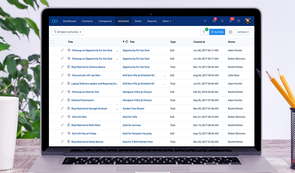

![Future trends in CRM [The evolution of CRM software in 2026]](/mm-images/future-trends-in-crm-and-how-to-prepare-now-0u2u403h.webp?width=730 "Future trends in CRM [The evolution of CRM software in 2026]")


Key Takeaways
By 2026, your CRM (Customer Relationship Management) will evolve from a digital record-keeper to an intelligent partner that thinks and acts with you.
The Agentic AI era will empower your CRM platforms to anticipate intent and automate multi-step decisions autonomously.
With predictive decision intelligence, you'll move from reacting to predicting, turning customer data into real-time foresight.
A unified omnichannel experience will let your customers connect with you seamlessly across all platforms and touchpoints.
Building trust through ethical AI, transparency, and sustainability will define how your CRM drives long-term loyalty and growth.
By 2026, CRM systems will no longer be digital filing cabinets; they'll be intelligent partners.
The CRM industry is at a defining moment, where automation, data, and intelligence converge to create systems that think, act, and evolve with every customer interaction.
The global CRM market is projected to grow from USD 73.40 billion in 2024 to USD 163.2 billion by 2030, a 14.6% CAGR driven by AI and automation.
Rather than manual updates, CRMs will autonomously analyze behavior, predict intent, and take the next best action. Basically, the CRM systems learn from every interaction to better understand evolving customer needs and expectations.
This is a foundational shift, transforming CRM technology from a tracking tool into an intelligent growth engine.
Customer relationship management platforms are evolving into systems of intelligence, blending machine reasoning, voice, vision, and real-time data into a single, connected ecosystem.
In this blog, we'll explore the key trends shaping CRM innovation in 2026 and beyond, backed by insights from Gartner, Deloitte, and other industry leaders.
Let's dive in.
10 Core trends shaping CRM systems for 2026 and beyond
The focus is shifting from tracking interactions to driving outcomes, where CRMs learn, decide, and act alongside your teams.
These ten key trends reveal how businesses will build smarter, faster, and more connected relationships in the years ahead.
1. Agentic AI and intelligent CRM automation
Until now, CRM systems have operated on simple rules and reminders. By 2026, they'll operate with reasoning and intent.
AI-powered CRM represents the next stage of artificial intelligence in customer relationship management. It can understand context, make independent decisions, and complete complex workflows without constant user input.
Unlike older automation tools that only follow commands, these systems can plan, prioritize, and adjust their actions based on outcomes.
For sales teams, this shift means less manual work and more time for meaningful conversations. These systems can interpret goals, coordinate tasks across connected apps, and adapt in real time, much like an experienced sales representative.
Imagine a CRM that notices a drop in customer engagement, drafts a reactivation message, segments the audience by churn risk, and assigns high-value leads to the right person, all before anyone logs in. That is what intelligent CRM automation can do.
Gartner predicts that by the end of 2026, 40% of enterprise applications will include integrated task-specific AI agents, up from less than 5% in 2025, as organizations move toward agentic ecosystems.
This evolution transforms CRM from a data tracker into a digital coworker that supports lead scoring, personalized outreach, appointment scheduling, and feedback management.
It will also support customer service agents by handling routine updates and responses, allowing them to focus on complex issues that need a human touch.
This intelligent automation helps teams improve customer service while maintaining speed and consistency across every interaction.
Further, the biggest benefit is time.
Modern CRMs reduce manual entry, improve sales processes, and give sales and marketing teams back valuable hours once lost to repetitive work.
As a result, businesses move from reacting to predicting, where technology not only automates tasks but also helps teams make better decisions that improve customer outcomes.
This marks a foundational shift, transforming traditional sales automation and sales processes into systems that continuously learn and improve with every customer interaction.
2. Predictive decision intelligence
Predictive decision intelligence uses data analysis and behavior modeling to forecast outcomes, recommend actions, and, in some cases, carry them out automatically.
According to Veridion's 2025 report, 82% of Fortune 1000 companies are increasing their investment in data and analytics, showing growing confidence in predictive systems to guide faster, smarter decisions and enhance sales forecasting accuracy.
Earlier platforms relied on manual review. Today, CRMs analyze signals such as email engagement, purchase timing, and service history to deliver real-time insights that evolve continuously with customer behavior.
These models enhance customer segmentation, helping teams anticipate changes in the customer journey rather than react after the fact.
When an opportunity begins to stall, the CRM can flag it, suggest re-engagement content, or route the lead to a higher-converting channel.
If buying patterns indicate churn risk, the system can prioritize loyalty offers or alert a success manager before the issue escalates.
For marketing teams, this means real-time optimization of marketing efforts and on-the-fly campaign adjustments.
For sales, it improves forecasting and sales automation, enabling faster, more precise follow-ups and updates. And for customer service teams, it allows early intervention and smoother resolutions.
3. Omnichannel and self-service engagement
Modern platforms are evolving into unified experience hubs that connect conversations, campaigns, and service interactions across every platform, social, web, chat, mobile, and even emerging channels like RCS and in-app messaging.
By integrating marketing campaigns directly into these engagement hubs, teams can deliver consistent messages and track responses across every touchpoint, without needing to hire dedicated software development team.
So, instead of operating in silos, CRMs now merge marketing, sales, and support data into a single customer timeline so every team sees the same story. This allows brands to recognize customer preferences instantly and deliver a unified customer experience that feels seamless across every touchpoint.
A representative might start a conversation on Instagram, continue it through live chat, and close it by text without losing context. That kind of continuity is what turns ordinary interactions into memorable experiences.
Self-service is also transforming engagement. Modern CRMs will include self-service customer portals where users can resolve issues, update details, or explore solutions at their own pace.
They'll integrate smart portals, virtual assistants, and searchable knowledge bases that help customers find answers instantly.
Gartner further projects that by 2029, Agentic AI will autonomously resolve 80% of common customer service issues without human intervention, leading to a 30% reduction in operational costs.
The result is faster resolutions, lower support costs, and higher customer satisfaction through automated customer interactions. CRMs will function as connected engagement ecosystems rather than back-office tools.
Your future-ready CRM is already here
Salesmate blends Agentic AI, predictive insights, and omnichannel engagement, everything today's teams need to build tomorrow's customer relationships.
4. Hyper-personalized customer intelligence
The next generation of CRMs will deliver experiences that adapt in real time to each customer's context, intent, and preferences.
This change is powered by real-time customer intelligence and data enhancement, enabling the combination of behavioral data and dynamic segmentation into a single, living profile.
Instead of relying on static details like "industry" or "region," CRMs will draw from every interaction, website visits, email responses, chat history, purchase timing, and even connected devices, to understand what each customer values at that moment.
For example, suppose a returning shopper explores premium products after a long break. In that case, the CRM can automatically trigger a relevant recommendation, a tailored follow-up, or a time-limited loyalty offer.
McKinsey's research shows that personalized marketing can deliver up to 8 times higher ROI and increase revenue by more than 10%.
But the bigger payoff is loyalty: when customers feel recognized and understood, they stay longer and engage more.
In 2026, that emotional connection will decide whether a brand wins attention or gets ignored.
Modern CRMs will achieve this through three key capabilities:
As brands move toward one-to-one communication across channels, hyper-personalization shifts from being a nice-to-have to a loyalty driver.
5. Voice-activated and conversational CRMs
Typing is giving way to talking, and by 2026, voice will become one of the most natural interfaces for CRM interaction.
Voice-activated CRMs are reshaping how sales and service teams engage with data. Instead of navigating menus or typing notes, professionals can ask their CRM for insights:
What used to take minutes now happens in seconds, hands-free, friction-free, and powered by natural language understanding (NLU).
This evolution goes far beyond dictation. The next wave of conversational CRMs will combine voice recognition, sentiment analysis, and generative AI to understand context and emotion.
A voice-enabled CRM could detect customer frustration in tone, recommend empathetic phrasing during live support, or automatically summarize post-call insights.
Leading CRM platforms are already experimenting with real-time conversation intelligence, automatically capturing action items, updating records, and generating follow-up drafts after every call.
By 2026, we'll also see deeper integration between CRMs and enterprise voice ecosystems and AI copilots, enabling teams to manage pipelines, capture notes, and schedule follow-ups entirely through voice commands.
This allows entire teams to operate via voice commands during meetings or commutes, a huge leap in mobility and productivity.
The value isn't just speed, it's accessibility and insight. Voice CRMs make it easier for teams on the move to log data accurately, for leaders to review summaries instantly, and for systems to understand user intent more intuitively than ever.
6. Integration with IoT and immersive customer data
As customer interactions expand beyond digital screens, CRMs are beginning to connect with the physical world through IoT-driven insights.
For example, a CRM connected to IoT can detect when a device shows unusual behavior, automatically open a support ticket, and notify a service agent before the customer even realizes there's an issue.
In retail, IoT-linked CRMs can analyze in-store movement patterns and align them with online activity to deliver consistent, personalized campaigns.
This evolution marks the era of immersive customer data, a deeper, continuous understanding of context, intent, and usage.
Instead of relying on surveys or post-purchase feedback, CRMs will use IoT signals to predict maintenance needs, send timely offers, and optimize inventory based on live consumption trends.
According to IDC, the number of connected IoT devices is projected to reach about 41.6 billion by 2025. The real challenge and opportunity lies in translating all that data into meaningful action.
Modern CRMs will need to organize this information intelligently, link device activity to customer profiles, and turn real-world interactions into valuable business insights.
7. Mobile-first CRM and contextual work environments
In an era of hybrid work and instant decisions, mobile CRMs are no longer optional; they're essential.
By 2026, mobile-first design will dominate CRM development, allowing users to access, analyze, and act on customer data anytime, anywhere.
For modern CRM users, mobility defines how efficiently teams collaborate, update pipelines, and close deals on the go.
The next wave of mobile CRMs will go beyond simple dashboards and offer features such as:
CRMs will recognize where and when users are engaging and adjust accordingly. A sales rep in the field might see route suggestions, while a support manager on call could view live ticket metrics.
8. Unified collaboration and connected CRM ecosystems
By 2026, CRMs will no longer operate in isolation. They will serve as the nerve center of every business ecosystem.
The modern customer journey spans marketing, sales, support, product, and finance, and consistency across these functions requires seamless integration.
The next generation of connected CRM ecosystems will give teams a shared view of each customer, instant context, and the ability to trigger cross-functional workflows.
For example:
This connected ecosystem empowers every team to collaborate effectively and deliver better customer service, since no touchpoint or context gets lost.
APIs, low-code platforms, and native integration hubs will enable this level of coordination.
This approach, often called the CRM-as-a-platform model, positions CRM as a core business operating system rather than a single tool.
9. Industry-specific and verticalized CRM solutions
Generic CRMs often fall short in specialized use cases such as property deal tracking in real estate, claims management in insurance, or patient engagement in healthcare.
Modern vertical CRMs solve this by embedding domain expertise directly into their systems.
For example:
This verticalization trend is being accelerated by low-code and no-code customization.
Modern platforms now let users create industry modules such as policy renewals or case intake workflows without writing code.
That flexibility helps both SMBs and enterprises adapt quickly as their industries evolve.
Give your CRM a brain of its own
Meet Skara AI Agents, the next-gen intelligence that understands intent, plans actions, and executes multi-step workflows across your CRM, chat, and campaigns.
10. Ethical AI, trust, and data privacy in CRM software
As technology becomes central to CRM strategy, trust will be its most valuable currency.
Customers now expect personalized experiences, but not at the expense of their privacy.
By 2026, the most successful CRMs will be those that combine intelligence with integrity.
Evolving regulations such as GDPR 2.0, CCPA updates, and new global privacy acts are already pushing companies to handle customer data transparently.
But ethical design goes beyond compliance. It means building systems that:
As CRMs begin to use biometric, voice, and connected-device data, the need for strong data security, transparent governance, and AI accountability becomes even more critical to deliver customer service built on trust.
Leading platforms are now embedding ethical frameworks into their architecture, allowing administrators to review data sources, set privacy preferences, and define the limits of automation.
CRM providers that clearly communicate how their systems learn, decide, and protect information will lead the next wave of responsible innovation.
Conclusion
These trends show where your CRM software is heading, toward intelligent systems that predict, personalize, and build stronger customer relationships at every touchpoint.
For business leaders, this means three priorities:
By adapting early, businesses can move from managing contacts to predicting growth and from reacting to strengthening customer relationships through data and intelligent automation.
Salesmate CRM leads this transformation with an integrated AI agent builder, real-time analytics, and seamless voice and IoT capabilities, helping teams automate, personalize, and grow smarter every day.
Frequently asked questions
1. What are the key CRM trends for 2026?
The top CRM trends shaping 2026 include:
Agentic automation: CRMs will act independently, handle reasoning, and engage in proactive outreach.
Predictive analytics: Systems will forecast outcomes rather than only report them.
Omnichannel engagement: Unified customer communication across chat, voice, email, and social.
Data privacy and ethics: Transparent, compliant data practices will build trust.
Vertical CRMs: Industry-specific platforms for real estate, healthcare, retail, and finance.
Purpose-driven systems: CRMs that track ESG impact and strengthen ethical loyalty.
2. How can businesses prepare for AI-powered CRM?
Start with clean, well-structured customer data; it's the foundation of every intelligent workflow. Next, create an adoption roadmap with clear integration goals, pilot projects, and user training. Finally, choose a CRM that supports AI agent builders, enabling transparent, auditable, and adaptable automation.
3. What makes a CRM future-ready?
A future-ready CRM platform combines intelligent automation, strong data governance, and open integrations. It connects seamlessly with marketing, support, analytics, and ERP systems while adapting to new channels and data sources. Scalability, interoperability, and ethical design will define the CRMs that stay ahead.
Sonali Negi
Content WriterSonali is a writer born out of her utmost passion for writing. She is working with a passionate team of content creators at Salesmate. She enjoys learning about new ideas in marketing and sales. She is an optimistic girl and endeavors to bring the best out of every situation. In her free time, she loves to introspect and observe people.