A sales pipeline is more than a list of open deals. For sales leaders, it is a real-time view of where revenue opportunities stand, which deals are moving forward, and where potential roadblocks could impact the forecast.
But simply having a pipeline doesn't create predictable revenue. CRM for Sales reps need a consistent process for keeping pipeline data accurate, moving deals forward, and identifying opportunities that are likely to close.
That is where sales pipeline management comes in.
Sales pipeline management is the systematic process of tracking, evaluating, and advancing sales opportunities through defined stages of the sales process.
Done well, it gives sales teams the visibility to focus on the right opportunities, helps managers identify pipeline risks early, and provides the data needed for more confident sales forecasting.
In this guide, you’ll learn what sales pipeline management is, how the key pipeline stages work, how to build and manage a healthy pipeline, which metrics to track, and more.
What is sales pipeline management?
Sales pipeline management is the process of organizing, tracking, and actively managing sales opportunities as they move through each stage of the sales cycle.
It gives sales teams a structured way to understand what is happening with every deal, what action is required next, and which opportunities are most likely to close.
A well-managed pipeline connects sales activities with revenue outcomes.
Sales reps can prioritize their efforts based on deal value, buyer engagement, stage, and likelihood of closing, while sales managers can monitor pipeline health, identify stalled opportunities, and spot gaps that could affect future revenue.
The goal is not simply to have more deals in the pipeline, but to build a healthy, predictable pipeline that supports sustainable revenue growth.
Why is sales pipeline management important?
Effective sales pipeline management gives sales teams the structure and visibility they need to manage opportunities effectively.
It helps reps prioritize the right deals, follow up at the right time, and keep opportunities moving, while giving managers a clearer view of pipeline health, deal progress, and forecast risk.
With accurate pipeline data and consistent processes, sales teams can identify stalled opportunities early, focus their efforts where they matter most, and make more confident revenue forecasts.
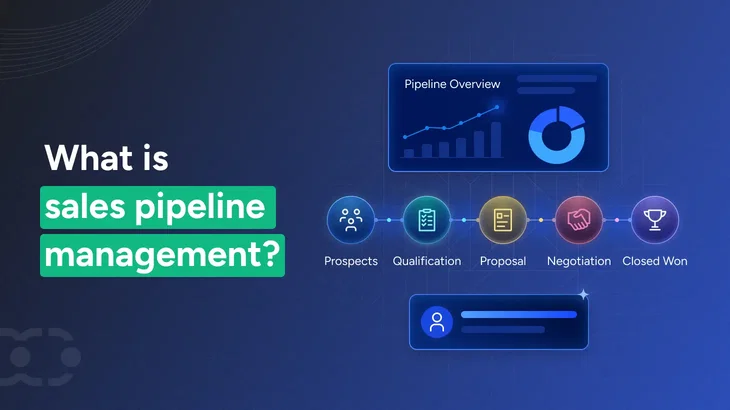
The exact stages can vary by business, deal size, and sales cycle. But most sales teams use a version of the same core structure, with contract management often included as part of the later stages.
1. Prospecting
Identify potential buyers through outbound outreach, referrals, inbound leads, events, or other channels. The goal is to find prospects who could be a good fit for your offering.
2. Lead qualification
Evaluate whether a prospect is worth pursuing based on factors such as need, fit, budget, authority, and timing. This keeps unqualified opportunities out of your active pipeline.
3. Discovery
Learn about the prospect’s goals, challenges, requirements, and buying process through calls or meetings. This helps determine whether your solution can address their needs.
4. Demo or Solution presentation
Show the prospect how your product or service can solve their specific challenges. The focus shifts from understanding the problem to evaluating the proposed solution.
5. Proposal or Offer
Share pricing, scope, terms, or a tailored proposal based on the prospect’s requirements. At this stage, the opportunity moves closer to a buying decision.
6. Negotiation
Address objections, pricing concerns, contract terms, and requests from the buyer or other stakeholders. The goal is to resolve final concerns and reach an agreement.
7. Closed won or Closed lost
The deal is either successfully converted into a customer or exits the pipeline without a sale. Both outcomes provide valuable insights into your sales process.
How to manage a sales pipeline effectively
Effective sales pipeline management requires clear stages, accurate data, consistent follow-ups, and regular reviews to keep opportunities moving.
1. Define clear pipeline stages
Every stage should represent a meaningful step in the buying process. Avoid vague stages such as "In progress" and use specific stages such as "Discovery completed," "Demo completed," or "Proposal sent."
2. Set entry and exit criteria
Define what must happen before a deal enters or leaves each stage.
For example:
- Proposal stage entry: The customer has confirmed requirements and requested pricing.
- Proposal stage exit: The customer has accepted the proposal or moved into negotiation.
Clear criteria prevent reps from moving deals forward based on assumptions rather than actual buyer progress.
3. Keep CRM data accurate
Outdated CRM data can quickly make a pipeline unreliable. Make sure reps regularly update key information such as:
- Deal value
- Deal stage
- Expected close date
- Decision-makers
- Last interaction
- Next sales activity
- Customer requirements
- Deal probability
Accurate data gives sales teams a clearer view of pipeline health and helps managers make more reliable forecasts.
4. Prioritize stalled deals
A deal sitting in the same stage for weeks may not be as healthy as its probability suggests. Use deal age, last activity, expected close date, and buyer engagement to identify opportunities that have lost momentum.
The next step could be a follow-up, a change in strategy, or moving the opportunity out of the active pipeline if there is no realistic path to close.
Pipeline rule: Every active deal should have a clear next activity and expected close date.
5. Review the pipeline regularly
Regular pipeline reviews help managers identify:
- Deals most likely to close
- Opportunities that need immediate attention
- Stages where deals are getting stuck
- Pipeline gaps against sales targets
- Forecast risks
Instead of asking reps to explain every opportunity, focus reviews on deals that need a decision, action, or intervention.
6. Measure sales velocity
Sales velocity measures how quickly opportunities move through the pipeline and generate revenue. It considers opportunity volume, average deal value, win rate, and sales cycle length.
Sales velocity = Number of opportunities × Average deal value × Win rate ÷ Average sales cycle length
Teams can increase sales velocity by generating more qualified opportunities, improving win rates, increasing average deal size, or shortening the sales cycle.
7. Connect sales and marketing data
A healthy pipeline starts with good-quality opportunities. Align sales and marketing data so leads can be captured, nurtured, scored, and handed to sales with the right context.
This helps sales teams spend more time on qualified opportunities and creates a stronger connection between lead generation and revenue.
How to measure sales pipeline health?
Tracking the right metrics helps sales leaders assess pipeline health, identify bottlenecks, and improve forecast accuracy. The most important metrics include:
| Metric | What it tells you |
|---|
| Pipeline value | Total value of active deals |
| Deal volume | Number of active opportunities |
| Win rate | Percentage of deals won |
| Stage conversion rate | Deals moving between stages |
| Sales velocity | Speed of revenue generation |
| Average deal size | Average value of closed deals |
| Sales cycle length | Average time to close |
| Deal aging | How long deals stay open |
| Pipeline coverage | Pipeline available against target |
| Forecast accuracy | Predicted vs. actual revenue |
| Pipeline leakage | Where deals drop out |
A few metrics worth calculating
a. Pipeline value:
Add the potential value of all active opportunities.
Pipeline value = Sum of active deal values
For example, 20 active opportunities worth $10,000 each give you a $200,000 pipeline.
b. Stage-to-stage conversion rates
Measure how many opportunities progress from one stage to the next.
Stage conversion rate = Opportunities that advance ÷ Opportunities entering the stage × 100
This can help you identify stages where deals consistently lose momentum.
c. Pipeline coverage
Compare your qualified pipeline with your sales target.
Pipeline coverage = Qualified pipeline value ÷ Sales target
For example, a $500,000 qualified pipeline against a $100,000 target gives you 5× pipeline coverage.
d. Sales velocity
Sales velocity estimates how much revenue your pipeline can generate based on four factors:
Sales velocity = Number of opportunities × Average deal value × Win rate ÷ Average sales cycle length
What is sales pipeline management software?
Sales pipeline management software is a tool that helps sales teams organize, track, analyze, and automate their sales opportunities throughout the sales cycle.
Sales pipeline management tools help organize and track these stages efficiently, supporting teams in streamlining their pipeline activities.
Most modern pipeline software is part of a CRM platform. Instead of managing opportunities across spreadsheets, emails, notes, and disconnected sales tools, teams can manage pipeline data in one system.
A pipeline management platform should help you answer:
- Which deals need attention today?
- Which opportunities have stalled?
- Which reps are likely to miss target?
- How much qualified pipeline do we have?
- Which stage has the biggest conversion problem?
- Which deals are most likely to close this month?
These capabilities help sales reps spend less time updating systems and more time on sales activities.
How does Salesmate help you manage your sales pipeline?








Key takeaways
A sales pipeline is more than a list of open deals. For sales leaders, it is a real-time view of where revenue opportunities stand, which deals are moving forward, and where potential roadblocks could impact the forecast.
But simply having a pipeline doesn't create predictable revenue. CRM for Sales reps need a consistent process for keeping pipeline data accurate, moving deals forward, and identifying opportunities that are likely to close.
That is where sales pipeline management comes in.
Sales pipeline management is the systematic process of tracking, evaluating, and advancing sales opportunities through defined stages of the sales process.
Done well, it gives sales teams the visibility to focus on the right opportunities, helps managers identify pipeline risks early, and provides the data needed for more confident sales forecasting.
In this guide, you’ll learn what sales pipeline management is, how the key pipeline stages work, how to build and manage a healthy pipeline, which metrics to track, and more.
What is sales pipeline management?
Sales pipeline management is the process of organizing, tracking, and actively managing sales opportunities as they move through each stage of the sales cycle.
It gives sales teams a structured way to understand what is happening with every deal, what action is required next, and which opportunities are most likely to close.
A well-managed pipeline connects sales activities with revenue outcomes.
Sales reps can prioritize their efforts based on deal value, buyer engagement, stage, and likelihood of closing, while sales managers can monitor pipeline health, identify stalled opportunities, and spot gaps that could affect future revenue.
The goal is not simply to have more deals in the pipeline, but to build a healthy, predictable pipeline that supports sustainable revenue growth.
Why is sales pipeline management important?
Effective sales pipeline management gives sales teams the structure and visibility they need to manage opportunities effectively.
It helps reps prioritize the right deals, follow up at the right time, and keep opportunities moving, while giving managers a clearer view of pipeline health, deal progress, and forecast risk.
With accurate pipeline data and consistent processes, sales teams can identify stalled opportunities early, focus their efforts where they matter most, and make more confident revenue forecasts.
Turn pipeline visibility into action
Track every opportunity, stay on top of follow-ups, and give your sales team a clear view of what needs to happen next.
What are the stages of a sales pipeline?
The exact stages can vary by business, deal size, and sales cycle. But most sales teams use a version of the same core structure, with contract management often included as part of the later stages.
1. Prospecting
Identify potential buyers through outbound outreach, referrals, inbound leads, events, or other channels. The goal is to find prospects who could be a good fit for your offering.
2. Lead qualification
Evaluate whether a prospect is worth pursuing based on factors such as need, fit, budget, authority, and timing. This keeps unqualified opportunities out of your active pipeline.
3. Discovery
Learn about the prospect’s goals, challenges, requirements, and buying process through calls or meetings. This helps determine whether your solution can address their needs.
4. Demo or Solution presentation
Show the prospect how your product or service can solve their specific challenges. The focus shifts from understanding the problem to evaluating the proposed solution.
5. Proposal or Offer
Share pricing, scope, terms, or a tailored proposal based on the prospect’s requirements. At this stage, the opportunity moves closer to a buying decision.
6. Negotiation
Address objections, pricing concerns, contract terms, and requests from the buyer or other stakeholders. The goal is to resolve final concerns and reach an agreement.
7. Closed won or Closed lost
The deal is either successfully converted into a customer or exits the pipeline without a sale. Both outcomes provide valuable insights into your sales process.
Bring more clarity to your sales pipeline
Salesmate gives your team a real-time view of active deals, pending follow-ups, and revenue opportunities so every rep knows where to focus next.
How to manage a sales pipeline effectively
Effective sales pipeline management requires clear stages, accurate data, consistent follow-ups, and regular reviews to keep opportunities moving.
1. Define clear pipeline stages
Every stage should represent a meaningful step in the buying process. Avoid vague stages such as "In progress" and use specific stages such as "Discovery completed," "Demo completed," or "Proposal sent."
2. Set entry and exit criteria
Define what must happen before a deal enters or leaves each stage.
For example:
Clear criteria prevent reps from moving deals forward based on assumptions rather than actual buyer progress.
3. Keep CRM data accurate
Outdated CRM data can quickly make a pipeline unreliable. Make sure reps regularly update key information such as:
Accurate data gives sales teams a clearer view of pipeline health and helps managers make more reliable forecasts.
4. Prioritize stalled deals
A deal sitting in the same stage for weeks may not be as healthy as its probability suggests. Use deal age, last activity, expected close date, and buyer engagement to identify opportunities that have lost momentum.
The next step could be a follow-up, a change in strategy, or moving the opportunity out of the active pipeline if there is no realistic path to close.
5. Review the pipeline regularly
Regular pipeline reviews help managers identify:
Instead of asking reps to explain every opportunity, focus reviews on deals that need a decision, action, or intervention.
6. Measure sales velocity
Sales velocity measures how quickly opportunities move through the pipeline and generate revenue. It considers opportunity volume, average deal value, win rate, and sales cycle length.
Sales velocity = Number of opportunities × Average deal value × Win rate ÷ Average sales cycle length
Teams can increase sales velocity by generating more qualified opportunities, improving win rates, increasing average deal size, or shortening the sales cycle.
7. Connect sales and marketing data
A healthy pipeline starts with good-quality opportunities. Align sales and marketing data so leads can be captured, nurtured, scored, and handed to sales with the right context.
This helps sales teams spend more time on qualified opportunities and creates a stronger connection between lead generation and revenue.
How to measure sales pipeline health?
Tracking the right metrics helps sales leaders assess pipeline health, identify bottlenecks, and improve forecast accuracy. The most important metrics include:
A few metrics worth calculating
a. Pipeline value:
Add the potential value of all active opportunities.
Pipeline value = Sum of active deal values
For example, 20 active opportunities worth $10,000 each give you a $200,000 pipeline.
b. Stage-to-stage conversion rates
Measure how many opportunities progress from one stage to the next.
Stage conversion rate = Opportunities that advance ÷ Opportunities entering the stage × 100
This can help you identify stages where deals consistently lose momentum.
c. Pipeline coverage
Compare your qualified pipeline with your sales target.
Pipeline coverage = Qualified pipeline value ÷ Sales target
For example, a $500,000 qualified pipeline against a $100,000 target gives you 5× pipeline coverage.
d. Sales velocity
Sales velocity estimates how much revenue your pipeline can generate based on four factors:
Sales velocity = Number of opportunities × Average deal value × Win rate ÷ Average sales cycle length
What is sales pipeline management software?
Sales pipeline management software is a tool that helps sales teams organize, track, analyze, and automate their sales opportunities throughout the sales cycle.
Sales pipeline management tools help organize and track these stages efficiently, supporting teams in streamlining their pipeline activities.
Most modern pipeline software is part of a CRM platform. Instead of managing opportunities across spreadsheets, emails, notes, and disconnected sales tools, teams can manage pipeline data in one system.
A pipeline management platform should help you answer:
These capabilities help sales reps spend less time updating systems and more time on sales activities.
How does Salesmate help you manage your sales pipeline?
Salesmate gives sales teams a centralized view of their deals, activities, and customer interactions, making it easier to manage opportunities from qualification to close.
It helps you manage pipeline, communication, and follow-up from one CRM software.
You can create multiple pipelines, customize deal stages to match your sales process, and track each opportunity as it moves forward.
With a visual pipeline and deal-level activity tracking, reps can see which opportunities need attention, what happened previously, and what action should come next.
Managers can also monitor deal movement, stage probabilities, pipeline value, and expected close dates to get a clearer picture of pipeline health and forecast performance.
Salesmate also helps automate the repetitive work that can slow deals down. Workflow automation can assign leads, create activities, send notifications and emails, and update records based on defined triggers.
For teams looking to add AI to their pipeline, Skara AI Agents can engage website visitors, ask qualifying questions, capture lead information, and route high-intent leads to the sales team in real time.
Skara AI can also qualify leads and follow up across channels, helping teams respond faster and keep promising opportunities moving.
The result: a more organized pipeline, fewer manual tasks, better visibility into deal health, and more opportunities moving toward close.
Manage your entire sales pipeline in one place
Track deals, automate follow-ups, monitor pipeline health, and help your team focus on the opportunities most likely to close.
Best practices for sales pipeline management
A few practical pipeline management practices can make a significant difference.
Final thoughts
Sales pipeline management is about more than tracking where deals sit. It’s about keeping the right opportunities moving with accurate data, clear next steps, and consistent follow-up.
When sales teams regularly review pipeline health, identify stalled deals, and focus on opportunities with real buying potential, they can prioritize their time more effectively and make more reliable revenue forecasts.
The right CRM can make this process easier by bringing pipeline data, sales activities, automation, and AI-powered insights into one place. The result is a more organized, predictable pipeline that helps your team turn opportunities into revenue.
Frequently asked questions
1. What does sales pipeline management mean?
Sales pipeline management is the process of tracking, organizing, and advancing sales opportunities through defined pipeline stages. It helps sales teams prioritize deals, maintain accurate data, follow up consistently, and improve revenue forecasting.
2. What makes a healthy sales pipeline?
A healthy sales pipeline has qualified opportunities, clear next steps, accurate deal data, and a balanced flow of opportunities across stages. It should reflect realistic revenue potential rather than simply contain a large number of open deals.
3. How often should you review your sales pipeline?
Sales teams should review their pipeline at least weekly. Regular reviews help identify stalled deals, pipeline gaps, changing close dates, and forecast risks before they affect sales targets.
4. What causes deals to get stuck in the sales pipeline?
Deals commonly stall because of weak qualification, unclear next steps, slow follow-up, pricing concerns, changing buyer priorities, or delays from decision-makers. Reviewing deal activity and stage aging can help identify the cause and determine the next action.
5. Can AI improve sales pipeline management?
Yes. AI can help sales teams prioritize opportunities, automate follow-ups, identify stalled deals, qualify leads, schedule meetings, and surface useful deal insights. This can reduce manual work and help reps focus on opportunities with the highest potential.
6. What are the most common sales pipeline mistakes?
Common mistakes include using unclear stages, keeping unqualified or inactive deals in the pipeline, allowing CRM data to become outdated, missing follow-ups, and using unrealistic close dates or deal values. These issues can reduce pipeline visibility and make forecasts less reliable.
Shivani Tripathi
Shivani TripathiShivani is a passionate writer who found her calling in storytelling and content creation. At Salesmate, she collaborates with a dynamic team of creators to craft impactful narratives around marketing and sales. She has a keen curiosity for new ideas and trends, always eager to learn and share fresh perspectives. Known for her optimism, Shivani believes in turning challenges into opportunities. Outside of work, she enjoys introspection, observing people, and finding inspiration in everyday moments.