Buyer intent signals: What to track (and what to ignore)
Intent signals are specific, observable actions - or combinations of actions - that imply a higher likelihood of purchase. Not all engagement is created equal, and robust intent models consider volume, recency, and diversity of actions.
First-party intent signals worth tracking
- Multi-visit pricing page behavior within 7–14 days
- High engagement with onboarding or migration guides
- Repeat visits from multiple stakeholders at the same company
- Reactivation of dormant contacts in email or CRM data
- Support tickets asking about features that suggest evaluation
Third-party intent signals worth tracking
- Topic surges around your category from providers like Bombora.
- Review platform comparisons between you and a competitor on G2
- Media consumption on B2B publisher networks and industry publications
Social media interactions as intent signals
- Likes, comments, shares, follows, direct messages, and participation in LinkedIn or X threads about CRM selection can be valuable. Social media engagement becomes meaningful when it correlates with other online behavior.
What to ignore or down-weight
- One-off blog visits with no follow-up actions
- Accidental clicks and broad top-of-funnel content views (e.g., generic "what is CRM" articles)
- Bot-generated traffic
Buyer intent data can also reveal competitive research, indicating customers may consider alternatives - a signal you want to capture, not ignore.
The value of buyer intent data is in how it changes day-to-day marketing and sales strategies - not in dashboards alone. Here's how it works across the organization:
- Marketing teams can use intent data to build dynamic in-market audiences for campaigns - targeting companies surging on topics like "CRM with automation" with tailored ad creative and relevant content.
- Sales and marketing teams share a single, intent-informed view of which target accounts to prioritize this week, reducing friction around "lead quality" debates. This alignment is where leveraging intent data transforms from theory into business growth.
Using first party intent data inside Salesmate
This section shows concrete ways Salesmate customers turn first-party intent into real actions.
Key first party sources Salesmate users rely on:
- Website forms and tracking parameters
- Email engagement (opens, clicks, replies)
- Call and SMS history.
- Pipeline stage changes
- Support tickets from the built-in ticketing module
A simple lead scoring setup in Salesmate:
Assign positive points for visiting pricing or demo pages, downloading implementation content, or attending a webinar. Subtract for long inactivity periods.
Use score thresholds to move contacts between nurturing and sales-ready states. For detailed strategies, see this guide on lead scoring best practices.
Bringing third-party intent data into Salesmate workflows
While Salesmate excels at first-party intent, many teams choose to enrich their CRM with third-party intent data from providers like Bombora, G2, TrustRadius, or broader data providers.
The process at a high level:
- Receive account-level topics, scores, and timestamps from an intent data provider.
- Map them to custom fields in company or deal records in Salesmate.
- Update regularly via weekly imports or API syncs.
For example, only trigger expensive outbound plays when an account shows both off-site research behavior and on-site engagement.
This multi-source intent approach ensures you're spending sales outreach resources on accounts with the highest probability of converting.
Salesmate's openness - API, imports, integrations - gives SMB and mid-market teams access to intent-driven workflows without buying a full ABM suite. For teams exploring this approach, lead enrichment is a natural complement.
How do GTM teams use buyer intent data day-to-day?
Here are four practical plays that sales teams and marketing teams can launch using intent data inside a CRM like Salesmate:
- Wake the Sleeping Accounts: Identify accounts with rising third-party intent on "CRM migration" but low recent first-party engagement. Run a personalized reactivation sequence with case studies and migration checklists.
- Defend Against Competitor Evaluations: Track second- and third-party intent signals for competitors' names. When an existing customer appears in those datasets, Salesmate triggers a customer-success-led outreach with ROI reviews and product roadmap updates - a proactive retention play.
- Net-New In-Market Prospecting: Import them into Salesmate and launch sequences tailored to the specific topics they're researching. This is target account selling powered by real-time account intelligence.
- Priority Event and Webinar Follow-Up: Tie event registration and live engagement - polls, Q&A, chat - into Salesmate. Hot leads get a call within 24 hours; warm leads enter an email nurture; cold leads receive relevant content over weeks.
How to evaluate intent data providers?
Not all intent data providers are created equal. Quality, transparency, and ease of activation matter more than sheer data volume.
Evaluation criteria
- Signal relevance: Topics and intent data sources aligned with your ICP?
- Coverage: Industries, regions, company sizes - does the provider cover SMBs, not just enterprise?
- Recency and update frequency: Daily refreshes beat weekly; stale signals lose value fast
- Methodology clarity: How are intent scores calculated? What engagement metrics drive them?
Compliance and ethics: Confirm the provider complies with GDPR and CCPA, uses consent-based tracking, and offers clear documentation. Only about 9% of California data brokers were fully compliant with transparency requirements in recent studies - a sobering reminder to vet your partners.
Notable providers to evaluate: Demandbase offers a comprehensive suite for buyer intent data. Lead Forensics provides real-time prospect identification data.
Activation matters: Choose providers that integrate with your CRM and marketing tools so signals power workflows. Contrast opaque credit-based systems (like HubSpot's, which gates features behind credits and admin permissions) with more straightforward approaches.
Avoid overreliance on any single source: Validate provider performance by tracking conversion rates, opportunity creation, and win rates for intent-enriched segments versus control groups. Deep insights come from combining sources - not trusting one blindly.
Measuring success: From intent signals to revenue impact
Teams should define clear success metrics before rolling out intent data - not just "more signals," but improvements in pipeline and revenue outcomes across six-to-twelve-month windows.
Key KPIs to track:
- Increase in meeting-booked rates on intent-enriched sales outreach.
- Higher opportunity creation rates from in-market accounts
- Shorter sales cycles for intent-qualified deals
- Better win rates and improved marketing ROI (lower CPL and CAC)
- Engagement metrics comparing intent-triggered versus general outreach
Measure with Salesmate
Build reports comparing conversion from segments with high intent scores versus general outreach. Track which workflows triggered by first-party and third-party intent data actually produce revenue. Use Salesmate's built-in reporting and analytics to connect the dots from signal to closed deal.
Run controlled experiments
A/B test sequences with and without intent-personalized messaging. Limit certain outbound reps to intent-qualified accounts and compare outcomes to a control group. Success stories will emerge from the data, not from assumptions.
Iterate continuously
Update scoring rules, workflows, and provider configurations as you learn which signals correlate with closed-won deals. Market trends shift, buyer behavior evolves, and intent strategies that worked in Q1 may need adjustment by Q3.
Turn buyer intent into revenue opportunities
Buyer intent data helps B2B teams move beyond guesswork and focus on accounts that are actively researching solutions.
By combining first-party, second-party, and third-party signals, teams can identify buying interest earlier, personalize outreach, and prioritize opportunities with greater confidence.
The real value comes from acting on these insights. With Salesmate, teams can bring prospect data into their CRM, score leads, automate follow-ups, and track which intent-driven activities contribute to pipeline growth and conversions.


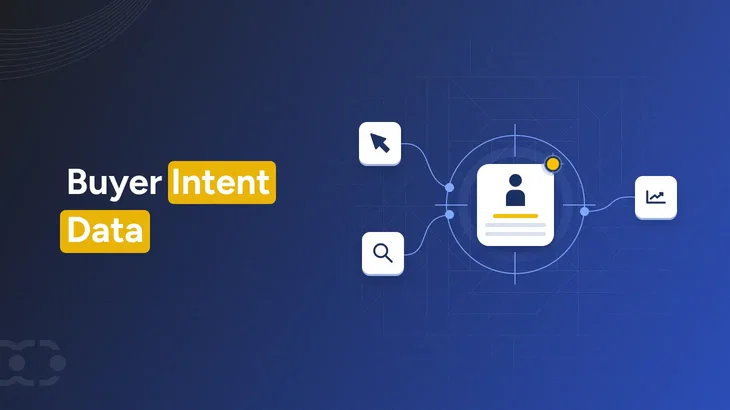




Key takeaways
Your next customer could be researching your product, comparing competitors, or reading reviews right now, without ever visiting your website or filling out a form.
Buyer intent data helps you identify these signals, understand what prospects are looking for, and reach them when they're most likely to engage.
In this guide, you'll learn what buyer intent data is, the different types and sources, and how to turn these insights into actionable sales and marketing workflows using a CRM like Salesmate.
What is buyer intent data?
That convergence of signals is buyer intent data in action - and it just handed your sales team a shortlist of accounts worth calling this week.
Intent data does not guarantee a purchase. It reduces guesswork by improving outreach timing, relevance, and focus across marketing and sales.
It identifies active demand before potential customers fill out forms - giving you a head start over competitors who wait for inbound.
Types of buyer intent data: First party vs. Second party vs. Third party
Buyer intent data is categorized into first-party, second-party, and third-party types. Each plays a distinct role in building a comprehensive view of which accounts are researching your category - and how far along they are in the buyer journey.
Integrating these types improves account-based marketing effectiveness by giving you both depth and breadth.
Using multiple intent data sources helps identify actionable insights, and modern intent data providers often blend all three types.
Turn buyer intent into your next sales opportunity
With Salesmate, you can bring prospect information into your CRM, track engagement, and use workflows to prioritize follow-ups while interest is high.
Buyer intent signals: What to track (and what to ignore)
Intent signals are specific, observable actions - or combinations of actions - that imply a higher likelihood of purchase. Not all engagement is created equal, and robust intent models consider volume, recency, and diversity of actions.
First-party intent signals worth tracking
Third-party intent signals worth tracking
Social media interactions as intent signals
What to ignore or down-weight
Buyer intent data can also reveal competitive research, indicating customers may consider alternatives - a signal you want to capture, not ignore.
Buyer intent data powering marketing & sales strategies
The value of buyer intent data is in how it changes day-to-day marketing and sales strategies - not in dashboards alone. Here's how it works across the organization:
Using first party intent data inside Salesmate
This section shows concrete ways Salesmate customers turn first-party intent into real actions.
Key first party sources Salesmate users rely on:
A simple lead scoring setup in Salesmate:
Assign positive points for visiting pricing or demo pages, downloading implementation content, or attending a webinar. Subtract for long inactivity periods.
Use score thresholds to move contacts between nurturing and sales-ready states. For detailed strategies, see this guide on lead scoring best practices.
Bringing third-party intent data into Salesmate workflows
While Salesmate excels at first-party intent, many teams choose to enrich their CRM with third-party intent data from providers like Bombora, G2, TrustRadius, or broader data providers.
The process at a high level:
For example, only trigger expensive outbound plays when an account shows both off-site research behavior and on-site engagement.
This multi-source intent approach ensures you're spending sales outreach resources on accounts with the highest probability of converting.
Salesmate's openness - API, imports, integrations - gives SMB and mid-market teams access to intent-driven workflows without buying a full ABM suite. For teams exploring this approach, lead enrichment is a natural complement.
Turn intent signals into timely sales actions
Third-party intent data tells you which accounts may be in-market. Salesmate helps your team organize those insights, prioritize follow-ups, and manage outreach from one CRM.
How do GTM teams use buyer intent data day-to-day?
Here are four practical plays that sales teams and marketing teams can launch using intent data inside a CRM like Salesmate:
How to evaluate intent data providers?
Not all intent data providers are created equal. Quality, transparency, and ease of activation matter more than sheer data volume.
Evaluation criteria
Compliance and ethics: Confirm the provider complies with GDPR and CCPA, uses consent-based tracking, and offers clear documentation. Only about 9% of California data brokers were fully compliant with transparency requirements in recent studies - a sobering reminder to vet your partners.
Notable providers to evaluate: Demandbase offers a comprehensive suite for buyer intent data. Lead Forensics provides real-time prospect identification data.
Activation matters: Choose providers that integrate with your CRM and marketing tools so signals power workflows. Contrast opaque credit-based systems (like HubSpot's, which gates features behind credits and admin permissions) with more straightforward approaches.
Avoid overreliance on any single source: Validate provider performance by tracking conversion rates, opportunity creation, and win rates for intent-enriched segments versus control groups. Deep insights come from combining sources - not trusting one blindly.
Measuring success: From intent signals to revenue impact
Teams should define clear success metrics before rolling out intent data - not just "more signals," but improvements in pipeline and revenue outcomes across six-to-twelve-month windows.
Key KPIs to track:
Measure with Salesmate
Build reports comparing conversion from segments with high intent scores versus general outreach. Track which workflows triggered by first-party and third-party intent data actually produce revenue. Use Salesmate's built-in reporting and analytics to connect the dots from signal to closed deal.
Run controlled experiments
A/B test sequences with and without intent-personalized messaging. Limit certain outbound reps to intent-qualified accounts and compare outcomes to a control group. Success stories will emerge from the data, not from assumptions.
Iterate continuously
Update scoring rules, workflows, and provider configurations as you learn which signals correlate with closed-won deals. Market trends shift, buyer behavior evolves, and intent strategies that worked in Q1 may need adjustment by Q3.
Turn buyer intent into revenue opportunities
Buyer intent data helps B2B teams move beyond guesswork and focus on accounts that are actively researching solutions.
By combining first-party, second-party, and third-party signals, teams can identify buying interest earlier, personalize outreach, and prioritize opportunities with greater confidence.
The real value comes from acting on these insights. With Salesmate, teams can bring prospect data into their CRM, score leads, automate follow-ups, and track which intent-driven activities contribute to pipeline growth and conversions.
Frequently asked questions
1. How do I start using buyer intent data if my company is small and has no external providers yet?
Instrument your website forms, email campaigns, and CRM to capture page visits, content downloads, and engagement for every lead. Build a simple lead scoring model using readily available signals - repeat visits to key pages, email reply rates, deal-stage moves - and prioritize outreach based on those scores.
2. How can I use social media engagement as an intent signal without getting overwhelmed by noise?
Isolated likes or follows rarely equal strong buying intent. Instead, look for patterns: repeated comments, shares, DMs, or participation in multiple threads about your product category. Track only high-value social media interactions - posts about migrations, comparison questions, or detailed product feedback related to CRM or automation.
3. Does using third-party intent data conflict with privacy regulations like GDPR or CCPA?
Compliant third party intent data providers operate within legal frameworks - obtaining consent where required, anonymizing data when appropriate, and providing clear opt-out mechanisms. Collaborate with legal and security teams, especially when operating in the EU, UK, or California, to vet providers and set internal data-handling policies.
4. What's the difference between an intent data platform and a CRM like Salesmate?
Intent data platforms (or intent data providers) specialize in collecting, modeling, and scoring behavioral data across many properties. A CRM like Salesmate is the operational system where sales, marketing, and support teams work daily. Intent signals become truly valuable only when activated inside workflows - lead routing, sequences, and analytics.
5. How often should I refresh and review my intent data strategy?
A quarterly review cadence works well for most B2B teams - reassess scoring thresholds, key topics, and activation rules based on recent performance. An annual strategic review (each January) helps evaluate whether your current mix of first-party, second-party, and third-party data still matches your ICP, markets, and product roadmap.
Shivani Tripathi
Shivani TripathiShivani is a passionate writer who found her calling in storytelling and content creation. At Salesmate, she collaborates with a dynamic team of creators to craft impactful narratives around marketing and sales. She has a keen curiosity for new ideas and trends, always eager to learn and share fresh perspectives. Known for her optimism, Shivani believes in turning challenges into opportunities. Outside of work, she enjoys introspection, observing people, and finding inspiration in everyday moments.