Designers no longer need weeks to finalize collections. Marketing teams no longer depend entirely on physical shoots.
AI fashion design tools can replace costly photo shoots by generating professional product images online, and AI can generate high-quality fashion images without the need for traditional photo shoots.
AI can produce realistic product visuals in seconds, enhancing marketing automation for fashion brands and apparel businesses.
AI in fashion is no longer experimental; it’s a game-changer.
Whether you’re a fashion designer, brand owner, or part of a creative team, understanding the best AI tools available today can help you stay ahead in a rapidly evolving market.
These tools allow users to work anytime, anywhere, without specialized software or equipment.
Many of these solutions are delivered as a platform for fashion creatives, supporting collaboration and innovation across the industry.
Why AI is transforming the fashion industry
AI is reshaping every layer of the fashion ecosystem, from design to sales.
Traditionally, creating a new clothing collection involved multiple stages: ideation, sketching, sampling, photoshoots, and marketing.
Now, AI technology is used specifically in the fashion design process to create clothing concepts, visualize garments, and improve workflow efficiency by automating and enhancing traditional fashion design activities.
Now, AI tools streamline this entire workflow. Designers can generate new designs instantly. Brands can test multiple styles and trends without committing to physical samples.
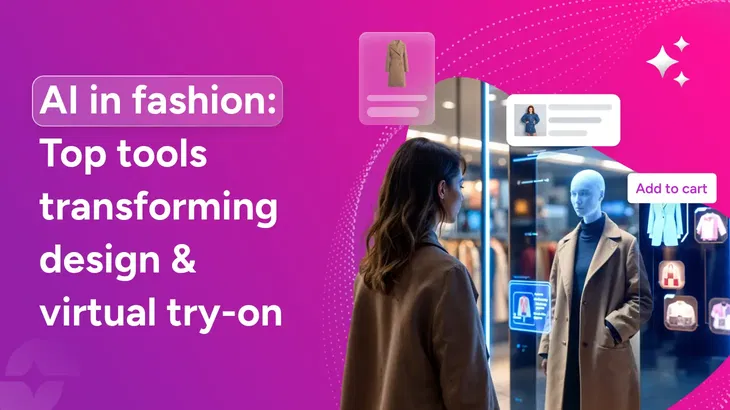
Marketing teams can create high-quality visuals using AI-generated models. And customers can experience virtual try-ons from their phones.
Top 10 fashion AI tools for the clothing industry in 2026
From AI fashion models to virtual try-on experiences, 2026 is the year when artificial intelligence is redefining how fashion is designed, marketed, and sold.
1. Skara AI agents - for fashion commerce
Skara AI agents are an AI-native commerce layer built specifically for fashion and eCommerce brands.
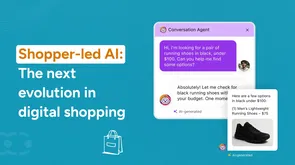
Instead of acting like a basic chatbot, it behaves like a digital stylist + sales assistant, understanding shopper intent, recommending products, and even guiding users from discovery to checkout.
AI-powered design tools now enable designers to quickly generate new collections, bringing fashion designs to life with realistic and engaging visuals that enhance creativity and brand storytelling.
Some tools even let designers create new styles or visuals with just one click, streamlining workflows and saving valuable time.
After using platforms like FashionINSTA and 3D models for virtual try-ons, automated tools such as Six Atomic can quickly calculate pattern grading, while computer vision detects fabric defects for quality control.
Key features
- AI stylist with natural language understanding
- Personalized outfit recommendations
- Cart recovery & checkout automation
- Omnichannel deployment (WhatsApp, web, etc.)
- AI agents for fit and sizing questions & guidance.
AI-powered design tools are revolutionizing how designers create clothing.
AI fashion design refers to a suite of machine-learning-powered tools that streamline the creation, visualization, and iteration of clothing designs, making the process faster, more scalable, and accessible while serving as a creative assistant to designers.
These tools allow designers to input ideas, fabrics, patterns, or inspirations and instantly generate multiple clothing designs.
Whether it’s a dress, streetwear, or formal outfits, AI can produce a wide range of styles in seconds.
Instead of sketching manually, designers can:
- Generate new collections quickly.
- Experiment with patterns and materials
- Explore trends based on data.
- Refine concepts faster
FashionINSTA specializes in transforming sketches into production-ready patterns, reducing pattern-making time by 70%.
AI can also convert 2D sketches into 3D models instantly, allowing designers to visualize products without creating physical samples.
This significantly shortens the design workflow and helps brands bring new collections to market faster.
AI Stylist, Not Just a Chatbot
From design to checkout, Skara AI agents power the entire fashion commerce journey with intelligence, personalization, and speed.
2. Style3D - AI-powered 3D fashion design
Style3D is a comprehensive AI design platform that enables designers to transform ideas, sketches, or prompts into fully realized 3D garments.
It combines AI generation, simulation, and virtual try-on into one system, allowing brands to reduce sampling costs and accelerate production cycles significantly.
Key features
- Text-to-design and image-to-design generation
- 3D garment simulation & prototyping
- Virtual try-on capabilities
- Fabric and pattern visualization
- AI-assisted design workflows
Style3D is an end-to-end platform for digital 3D design, allowing fabric simulation and virtual production-ready modeling.
3. CLO 3D - Realistic garment simulation
CLO 3D is one of the most widely adopted tools in digital fashion design, known for its highly realistic garment simulation.
Designers can visualize how fabrics drape, stretch, and move on virtual models before producing physical samples, drastically reducing waste and improving precision.
CLO 3D is industry-standard software for 3D prototyping that simulates realistic fabric physics.
Key features
- Advanced fabric physics simulation
- 3D garment visualization
- Avatar-based fitting
- Pattern creation tools
- Virtual prototyping
4. PhotoRoom - AI product photography
PhotoRoom enables fashion brands to create professional-grade product visuals without traditional photoshoots.
PhotoRoom is an AI-powered tool that helps fashion brands create studio-quality product images quickly.
With AI-powered editing and generation, brands can produce consistent, high-quality images for marketplaces, ads, and social media at scale.
PhotoRoom allows users to upload an original image as the starting point for generating or editing product visuals, and offers customizable backgrounds, including studio-quality and creative options, to enhance the final result.
Key features
- Background removal & replacement
- AI-generated product scenes
- Batch image editing
- Image upscaling
- Marketplace-ready visuals
5. WGSN - AI trend forecasting
WGSN is a leading trend intelligence platform used by global fashion brands to predict consumer preferences.
It analyzes massive datasets, from social media to retail behavior, to forecast trends and guide design decisions before they peak.
Key features:
- Trend prediction & analysis
- Consumer behavior insights
- Market intelligence reports
- Seasonal forecasting
- Data-driven design direction
Understanding trends is crucial in fashion.
WGSN operates as a trend-forecasting, consumer-insight, and design intelligence platform for fashion businesses.
Algorithms identify emerging fashion trends in real-time, allowing brands to align inventory with consumer demands.
WGSN helps fashion companies anticipate consumer trends and make smarter buying decisions.
AI tools analyze massive amounts of data, from social media, search behavior, and shopping patterns, to predict upcoming trends.
With AI, brands can:
- Identify trending styles early.
- Align collections with market demand.
- Reduce overproduction
- Make data-driven design decisions
This helps brands stay relevant in a fast-moving industry.
Related read: State of AI agents in eCommerce report 2026.
6. Botika- AI fashion model generation
Botika is one of the most advanced AI tools for creating realistic fashion models and product visuals.
It allows brands to transform simple product images into high-quality on-model photos without traditional photoshoots. This dramatically reduces production costs and speeds up content creation.
Botika stands out because it’s trained specifically for fashion, understanding garments, fabric details, and fit, while enabling brands to generate diverse, inclusive model imagery at scale.
Additionally, Botika enables brands to swap the person in a product image, allowing for customized model imagery without changing the product or background.
Key features
- AI-generated fashion models (no real photoshoot needed)
- Convert flat-lay images into on-model visuals.
- Background & styling customization
- AI fashion video generation
- Massive cost and time savings (up to 90% reduction)
Why is AI-generated model imagery becoming important? Traditionally, showcasing a product on different models required multiple photo shoots, which increased both cost and effort. This limited how much variety brands could realistically present. With AI, the same product can be visualized across different body types, styles, and demographics without additional shoots. This makes it easier for customers to relate to the product and improves their confidence in making a purchase, especially in online environments where physical interaction isn’t possible. |
7. Vue.ai by M2P- AI personalization engine
Vue.ai helps fashion retailers deliver highly personalized shopping experiences using AI.
It analyzes user behavior, preferences, and browsing patterns to recommend products, style outfits, and optimize merchandising.
Vue.ai can be integrated into a fashion brand's online store and website to enhance visual content, user experience, and customer engagement.
Key features
- Personalized recommendations
- AI styling suggestions
- Customer segmentation
- Visual merchandising automation
- Retail analytics
8. Uwear AI - virtual try-on & AI photoshoots
Uwear AI is designed for fashion brands seeking to scale product visuals and enhance online shopping experiences.
It allows brands to turn a single garment image into multiple AI-generated photos and enables customers to try outfits virtually before buying.
What makes Uwear unique is its ability to bridge content creation + shopper experience, helping brands both generate visuals and increase conversions through virtual try-on.
Key features
- AI photoshoots from a single image
- Virtual try-on for shoppers
- Batch generation (up to thousands of SKUs)
- Consistent model & brand styling
- Product analytics based on try-on behavior
Why is virtual try-on becoming more relevant? One of the biggest challenges in online fashion is uncertainty. Customers often hesitate because they are unsure how a product will look or fit in real life. Virtual try-on reduces this uncertainty by giving users a closer representation of how an outfit might appear on them. While it may not be perfect, it provides enough context to make more confident decisions. This not only improves the user experience but can also reduce return rates, which is a major concern for fashion brands. |
9. Minami AI - autonomous eCommerce operations agent
Minami AI is not just a chatbot; it’s a fully autonomous AI agent for eCommerce operations.
It handles everything from customer support agents to post-purchase workflows like returns, exchanges, delivery issues, and even order modifications.
For fashion brands dealing with high return rates and complex logistics, Minami acts like a 24/7 operations team.
What makes Minami powerful is its ability to take real actions, not just respond, like canceling orders, managing courier issues, or processing exchanges automatically.
It can handle nearly all customer queries while reducing support costs by over 90%.
Key features
- Handles 100% of customer support queries
- Autonomous returns & exchange management
- Order modification & CRM automation
- Courier communication & issue resolution
10. Syte AI - visual search & product discovery engine
Syte AI is one of the most advanced visual AI platforms for fashion eCommerce, focused on solving a critical problem: product discovery.
Instead of relying only on text search, it allows shoppers to find clothing using images, style inspiration, or similar items.
It uses computer vision + AI tagging to understand garments at a deep level (color, texture, style, fit) and then surfaces highly relevant recommendations in real time.
This makes the shopping experience more intuitive, especially for fashion, where visual intent matters more than keywords.
For fashion brands, Syte acts as a conversion engine, helping users discover products faster and increasing average order value.
Key features
- Visual search (upload image → find similar products)
- “Shop the look” & outfit-based recommendations
- AI-powered product tagging (15,000+ fashion attributes)
- Multi-object detection (find multiple items in one image)
- AI merchandising & search optimization
Must read: How AI shopping assistants improve product discovery and checkout conversions.
How does AI reduce costs and speed up fashion production?
AI is significantly reducing the need for physical samples and manual processes.
Traditionally, brands had to create multiple prototypes before finalizing a design. This was time-consuming and expensive.
With AI:
- Designers can test ideas digitally.
- Brands can visualize garments without producing them.
- Teams can experiment without risk.
- Production becomes more efficient
This leads to faster design cycles and lower costs.
AI fashion design workflow
AI is transforming how fashion collections are created, from the first idea to final launch.
Instead of relying on manual sketching and multiple physical samples, designers can now generate concepts instantly, visualize garments in 3D, and experiment with fabrics digitally.
This dramatically reduces the time and effort required in the early stages of design.
At the same time, AI streamlines collaboration between design, production, and marketing teams.
Brands can move from concept to campaign-ready visuals without delays, enabling faster launches and more agile responses to trends. The result is a smarter, faster, and more efficient design workflow.
E-commerce and online security in fashion AI
The integration of e-commerce AI agents has completely transformed the fashion industry, empowering fashion brands to market faster, reduce sample costs, and deliver a more engaging online shopping experience.
AI fashion models and virtual try-on features have become a true game-changer, allowing customers to try on clothes virtually and see how outfits look on different body types, all without the need for physical samples or costly photo shoots.
With advanced AI tools, fashion brands can create realistic models, upscale images, and generate new clothing designs in just a few clicks.
This not only helps brands maintain a consistent brand identity but also enables them to launch new collections and styles at unprecedented speed.
The ability to showcase clothes on diverse, AI-generated models means customers can visualize outfits that match their own proportions, boosting confidence and satisfaction.
However, as AI becomes more deeply embedded in e-commerce, online security has become a top priority for fashion brands.
The increased use of AI models, virtual try-on, and personalized email marketing campaigns means brands are handling more customer data than ever before.
Protecting this data from cyber threats and fraud is essential to maintaining customer trust and safeguarding brand reputation.
AI-powered security solutions are now at the forefront of online protection.
By leveraging machine learning algorithms, these tools can detect suspicious activity, prevent data breaches, and ensure that customer information remains secure throughout the shopping journey.
This proactive approach to online security allows fashion brands to focus on creativity and innovation, knowing their e-commerce platforms are protected.
Don't miss: 15 eCommerce tasks you should hand off to AI agents right now.
Beyond security, AI also enables brands to analyze customer preferences and shopping behavior, creating highly personalized marketing campaigns that drive sales and strengthen brand loyalty.
By understanding what customers want, whether it’s a specific style, fit, or trend, brands can tailor their offerings and deliver a seamless, data-driven shopping experience.
The use of AI in fashion design and production further enhances efficiency, reducing the need for physical samples and streamlining the entire workflow.
Brands can experiment with new designs, test different fabrics, and bring collections to market faster than ever before, all while keeping costs in check.
Ultimately, the integration of AI in e-commerce is reshaping the fashion industry from the ground up.
Fashion brands can now create immersive online experiences, cater to a wider range of body types with virtual try-on, and ensure every customer interaction is secure and personalized.
As AI continues to evolve, it will remain at the heart of innovation, efficiency, and customer satisfaction in the world of fashion.
AI-powered fashion commerce
Start scaling your fashion brand with AI agents that boost conversions, personalize experiences, and secure every transaction.
AI and inclusivity in fashion
AI is playing a transformative role in making the fashion industry more inclusive, accessible, and representative.
Fashion has been limited by narrow standards of body types, skin tones, and styling norms.
With AI, brands can now break those constraints by generating diverse models, simulating garments on different body shapes, and personalizing experiences for a much wider audience.
AI-powered tools enable brands to showcase clothing on multiple body types, sizes, and skin tones without the need for separate photoshoots.
This not only reduces production costs but also ensures that more customers can see themselves reflected in the brand.
Technologies like virtual try-on further enhance inclusivity by allowing shoppers to visualize how outfits will look on their own bodies, improving confidence and reducing uncertainty.
Beyond visuals, AI also supports inclusivity through personalization.
By analyzing customer preferences, behavior, and fit data, AI can recommend styles that suit individual needs, whether it’s size inclusivity, cultural preferences, or accessibility requirements.
In 2026, inclusivity is no longer just a brand value; it’s a competitive advantage. AI is enabling fashion brands to move from one-size-fits-all experiences to truly individualized and representative fashion for everyone.
The future of AI in fashion
The future of fashion is deeply connected with AI.
We can expect:
- Fully virtual fashion shows
- AI-generated collections based on real-time trends
- Hyper-personalized shopping experiences
- Seamless integration of virtual try-on across platforms
AI will continue to evolve, offering new possibilities for designers, brands, and customers.
Conclusion
AI is redefining the fashion industry in 2026.
From creating clothing designs to generating realistic models and enabling virtual try-on, AI tools are transforming how fashion is designed, marketed, and sold.
For fashion brands, adopting AI is no longer a luxury; it’s a necessity.
Those who embrace AI will be able to:
- Move faster
- Reduce costs
- Create better experiences
- Stay ahead of trends
The future of fashion is not just creative, it’s intelligent.
Frequently asked questions
1. What is AI in fashion design?
AI in fashion design refers to the use of machine learning and data-driven tools to create, visualize, and optimize clothing designs. These tools help designers generate new styles, simulate fabrics, and speed up the design process without relying heavily on manual work.
2. How are AI tools used in the fashion industry?
AI tools are used across the entire fashion lifecycle, including:
- Designing clothing collections
- Creating AI-generated models and product visuals
- Predicting fashion trends
- Enabling virtual try-on experiences
- Personalizing shopping recommendations
They help brands improve efficiency, reduce costs, and enhance customer experiences.
3. Can AI replace fashion designers?
No, AI is not a replacement for fashion designers. Instead, it acts as a creative assistant. Designers still bring originality, storytelling, and human creativity, while AI helps speed up processes and generate ideas.
4. How does virtual try-on work?
Virtual try-on uses AI and computer vision to map clothing onto a user’s body using images or live camera input. Customers can upload a selfie or use their device camera to see how outfits would look on them in real time.
5. Is AI in fashion safe for customer data?
Yes, when implemented correctly. Most modern AI platforms use encryption, secure APIs, and compliance standards to protect customer data. Additionally, AI-powered security systems can detect fraud and suspicious activity in real time. However, brands must ensure they follow data privacy regulations and use AI responsibly to maintain customer trust.
6. Can AI replace fashion designers?
No. AI is not a replacement for designers; it’s a creative assistant. Designers bring originality, cultural context, and storytelling. AI enhances their work by automating repetitive tasks, generating ideas, and speeding up execution. The best outcomes come from combining human creativity with AI capabilities.






Key takeaways
Designers no longer need weeks to finalize collections. Marketing teams no longer depend entirely on physical shoots.
AI fashion design tools can replace costly photo shoots by generating professional product images online, and AI can generate high-quality fashion images without the need for traditional photo shoots.
AI can produce realistic product visuals in seconds, enhancing marketing automation for fashion brands and apparel businesses.
AI in fashion is no longer experimental; it’s a game-changer.
Whether you’re a fashion designer, brand owner, or part of a creative team, understanding the best AI tools available today can help you stay ahead in a rapidly evolving market.
These tools allow users to work anytime, anywhere, without specialized software or equipment.
Many of these solutions are delivered as a platform for fashion creatives, supporting collaboration and innovation across the industry.
Why AI is transforming the fashion industry
AI is reshaping every layer of the fashion ecosystem, from design to sales.
Traditionally, creating a new clothing collection involved multiple stages: ideation, sketching, sampling, photoshoots, and marketing.
Now, AI technology is used specifically in the fashion design process to create clothing concepts, visualize garments, and improve workflow efficiency by automating and enhancing traditional fashion design activities.
Now, AI tools streamline this entire workflow. Designers can generate new designs instantly. Brands can test multiple styles and trends without committing to physical samples.
Marketing teams can create high-quality visuals using AI-generated models. And customers can experience virtual try-ons from their phones.
Top 10 fashion AI tools for the clothing industry in 2026
From AI fashion models to virtual try-on experiences, 2026 is the year when artificial intelligence is redefining how fashion is designed, marketed, and sold.
1. Skara AI agents - for fashion commerce
Skara AI agents are an AI-native commerce layer built specifically for fashion and eCommerce brands.
Instead of acting like a basic chatbot, it behaves like a digital stylist + sales assistant, understanding shopper intent, recommending products, and even guiding users from discovery to checkout.
AI-powered design tools now enable designers to quickly generate new collections, bringing fashion designs to life with realistic and engaging visuals that enhance creativity and brand storytelling.
Some tools even let designers create new styles or visuals with just one click, streamlining workflows and saving valuable time.
After using platforms like FashionINSTA and 3D models for virtual try-ons, automated tools such as Six Atomic can quickly calculate pattern grading, while computer vision detects fabric defects for quality control.
Key features
AI-powered design tools are revolutionizing how designers create clothing.
AI fashion design refers to a suite of machine-learning-powered tools that streamline the creation, visualization, and iteration of clothing designs, making the process faster, more scalable, and accessible while serving as a creative assistant to designers.
These tools allow designers to input ideas, fabrics, patterns, or inspirations and instantly generate multiple clothing designs.
Whether it’s a dress, streetwear, or formal outfits, AI can produce a wide range of styles in seconds.
Instead of sketching manually, designers can:
FashionINSTA specializes in transforming sketches into production-ready patterns, reducing pattern-making time by 70%.
AI can also convert 2D sketches into 3D models instantly, allowing designers to visualize products without creating physical samples.
This significantly shortens the design workflow and helps brands bring new collections to market faster.
AI Stylist, Not Just a Chatbot
From design to checkout, Skara AI agents power the entire fashion commerce journey with intelligence, personalization, and speed.
2. Style3D - AI-powered 3D fashion design
Style3D is a comprehensive AI design platform that enables designers to transform ideas, sketches, or prompts into fully realized 3D garments.
It combines AI generation, simulation, and virtual try-on into one system, allowing brands to reduce sampling costs and accelerate production cycles significantly.
Key features
Style3D is an end-to-end platform for digital 3D design, allowing fabric simulation and virtual production-ready modeling.
3. CLO 3D - Realistic garment simulation
CLO 3D is one of the most widely adopted tools in digital fashion design, known for its highly realistic garment simulation.
Designers can visualize how fabrics drape, stretch, and move on virtual models before producing physical samples, drastically reducing waste and improving precision.
CLO 3D is industry-standard software for 3D prototyping that simulates realistic fabric physics.
Key features
4. PhotoRoom - AI product photography
PhotoRoom enables fashion brands to create professional-grade product visuals without traditional photoshoots.
PhotoRoom is an AI-powered tool that helps fashion brands create studio-quality product images quickly.
With AI-powered editing and generation, brands can produce consistent, high-quality images for marketplaces, ads, and social media at scale.
PhotoRoom allows users to upload an original image as the starting point for generating or editing product visuals, and offers customizable backgrounds, including studio-quality and creative options, to enhance the final result.
Key features
5. WGSN - AI trend forecasting
WGSN is a leading trend intelligence platform used by global fashion brands to predict consumer preferences.
It analyzes massive datasets, from social media to retail behavior, to forecast trends and guide design decisions before they peak.
Key features:
Understanding trends is crucial in fashion.
WGSN operates as a trend-forecasting, consumer-insight, and design intelligence platform for fashion businesses.
Algorithms identify emerging fashion trends in real-time, allowing brands to align inventory with consumer demands.
WGSN helps fashion companies anticipate consumer trends and make smarter buying decisions.
AI tools analyze massive amounts of data, from social media, search behavior, and shopping patterns, to predict upcoming trends.
With AI, brands can:
This helps brands stay relevant in a fast-moving industry.
6. Botika- AI fashion model generation
Botika is one of the most advanced AI tools for creating realistic fashion models and product visuals.
It allows brands to transform simple product images into high-quality on-model photos without traditional photoshoots. This dramatically reduces production costs and speeds up content creation.
Botika stands out because it’s trained specifically for fashion, understanding garments, fabric details, and fit, while enabling brands to generate diverse, inclusive model imagery at scale.
Additionally, Botika enables brands to swap the person in a product image, allowing for customized model imagery without changing the product or background.
Key features
Why is AI-generated model imagery becoming important?
Traditionally, showcasing a product on different models required multiple photo shoots, which increased both cost and effort. This limited how much variety brands could realistically present.
With AI, the same product can be visualized across different body types, styles, and demographics without additional shoots.
This makes it easier for customers to relate to the product and improves their confidence in making a purchase, especially in online environments where physical interaction isn’t possible.
7. Vue.ai by M2P- AI personalization engine
Vue.ai helps fashion retailers deliver highly personalized shopping experiences using AI.
It analyzes user behavior, preferences, and browsing patterns to recommend products, style outfits, and optimize merchandising.
Vue.ai can be integrated into a fashion brand's online store and website to enhance visual content, user experience, and customer engagement.
Key features
8. Uwear AI - virtual try-on & AI photoshoots
Uwear AI is designed for fashion brands seeking to scale product visuals and enhance online shopping experiences.
It allows brands to turn a single garment image into multiple AI-generated photos and enables customers to try outfits virtually before buying.
What makes Uwear unique is its ability to bridge content creation + shopper experience, helping brands both generate visuals and increase conversions through virtual try-on.
Key features
Why is virtual try-on becoming more relevant?
One of the biggest challenges in online fashion is uncertainty. Customers often hesitate because they are unsure how a product will look or fit in real life.
Virtual try-on reduces this uncertainty by giving users a closer representation of how an outfit might appear on them. While it may not be perfect, it provides enough context to make more confident decisions.
This not only improves the user experience but can also reduce return rates, which is a major concern for fashion brands.
9. Minami AI - autonomous eCommerce operations agent
Minami AI is not just a chatbot; it’s a fully autonomous AI agent for eCommerce operations.
It handles everything from customer support agents to post-purchase workflows like returns, exchanges, delivery issues, and even order modifications.
For fashion brands dealing with high return rates and complex logistics, Minami acts like a 24/7 operations team.
What makes Minami powerful is its ability to take real actions, not just respond, like canceling orders, managing courier issues, or processing exchanges automatically.
It can handle nearly all customer queries while reducing support costs by over 90%.
Key features
10. Syte AI - visual search & product discovery engine
Syte AI is one of the most advanced visual AI platforms for fashion eCommerce, focused on solving a critical problem: product discovery.
Instead of relying only on text search, it allows shoppers to find clothing using images, style inspiration, or similar items.
It uses computer vision + AI tagging to understand garments at a deep level (color, texture, style, fit) and then surfaces highly relevant recommendations in real time.
This makes the shopping experience more intuitive, especially for fashion, where visual intent matters more than keywords.
For fashion brands, Syte acts as a conversion engine, helping users discover products faster and increasing average order value.
Key features
How does AI reduce costs and speed up fashion production?
AI is significantly reducing the need for physical samples and manual processes.
Traditionally, brands had to create multiple prototypes before finalizing a design. This was time-consuming and expensive.
With AI:
This leads to faster design cycles and lower costs.
AI fashion design workflow
AI is transforming how fashion collections are created, from the first idea to final launch.
Instead of relying on manual sketching and multiple physical samples, designers can now generate concepts instantly, visualize garments in 3D, and experiment with fabrics digitally.
This dramatically reduces the time and effort required in the early stages of design.
At the same time, AI streamlines collaboration between design, production, and marketing teams.
Brands can move from concept to campaign-ready visuals without delays, enabling faster launches and more agile responses to trends. The result is a smarter, faster, and more efficient design workflow.
E-commerce and online security in fashion AI
The integration of e-commerce AI agents has completely transformed the fashion industry, empowering fashion brands to market faster, reduce sample costs, and deliver a more engaging online shopping experience.
AI fashion models and virtual try-on features have become a true game-changer, allowing customers to try on clothes virtually and see how outfits look on different body types, all without the need for physical samples or costly photo shoots.
With advanced AI tools, fashion brands can create realistic models, upscale images, and generate new clothing designs in just a few clicks.
This not only helps brands maintain a consistent brand identity but also enables them to launch new collections and styles at unprecedented speed.
The ability to showcase clothes on diverse, AI-generated models means customers can visualize outfits that match their own proportions, boosting confidence and satisfaction.
However, as AI becomes more deeply embedded in e-commerce, online security has become a top priority for fashion brands.
The increased use of AI models, virtual try-on, and personalized email marketing campaigns means brands are handling more customer data than ever before.
Protecting this data from cyber threats and fraud is essential to maintaining customer trust and safeguarding brand reputation.
AI-powered security solutions are now at the forefront of online protection.
By leveraging machine learning algorithms, these tools can detect suspicious activity, prevent data breaches, and ensure that customer information remains secure throughout the shopping journey.
This proactive approach to online security allows fashion brands to focus on creativity and innovation, knowing their e-commerce platforms are protected.
Beyond security, AI also enables brands to analyze customer preferences and shopping behavior, creating highly personalized marketing campaigns that drive sales and strengthen brand loyalty.
By understanding what customers want, whether it’s a specific style, fit, or trend, brands can tailor their offerings and deliver a seamless, data-driven shopping experience.
The use of AI in fashion design and production further enhances efficiency, reducing the need for physical samples and streamlining the entire workflow.
Brands can experiment with new designs, test different fabrics, and bring collections to market faster than ever before, all while keeping costs in check.
Ultimately, the integration of AI in e-commerce is reshaping the fashion industry from the ground up.
Fashion brands can now create immersive online experiences, cater to a wider range of body types with virtual try-on, and ensure every customer interaction is secure and personalized.
As AI continues to evolve, it will remain at the heart of innovation, efficiency, and customer satisfaction in the world of fashion.
AI-powered fashion commerce
Start scaling your fashion brand with AI agents that boost conversions, personalize experiences, and secure every transaction.
AI and inclusivity in fashion
AI is playing a transformative role in making the fashion industry more inclusive, accessible, and representative.
Fashion has been limited by narrow standards of body types, skin tones, and styling norms.
With AI, brands can now break those constraints by generating diverse models, simulating garments on different body shapes, and personalizing experiences for a much wider audience.
AI-powered tools enable brands to showcase clothing on multiple body types, sizes, and skin tones without the need for separate photoshoots.
This not only reduces production costs but also ensures that more customers can see themselves reflected in the brand.
Technologies like virtual try-on further enhance inclusivity by allowing shoppers to visualize how outfits will look on their own bodies, improving confidence and reducing uncertainty.
Beyond visuals, AI also supports inclusivity through personalization.
By analyzing customer preferences, behavior, and fit data, AI can recommend styles that suit individual needs, whether it’s size inclusivity, cultural preferences, or accessibility requirements.
In 2026, inclusivity is no longer just a brand value; it’s a competitive advantage. AI is enabling fashion brands to move from one-size-fits-all experiences to truly individualized and representative fashion for everyone.
The future of AI in fashion
The future of fashion is deeply connected with AI.
We can expect:
AI will continue to evolve, offering new possibilities for designers, brands, and customers.
Conclusion
AI is redefining the fashion industry in 2026.
From creating clothing designs to generating realistic models and enabling virtual try-on, AI tools are transforming how fashion is designed, marketed, and sold.
For fashion brands, adopting AI is no longer a luxury; it’s a necessity.
Those who embrace AI will be able to:
The future of fashion is not just creative, it’s intelligent.
Frequently asked questions
1. What is AI in fashion design?
AI in fashion design refers to the use of machine learning and data-driven tools to create, visualize, and optimize clothing designs. These tools help designers generate new styles, simulate fabrics, and speed up the design process without relying heavily on manual work.
2. How are AI tools used in the fashion industry?
AI tools are used across the entire fashion lifecycle, including:
They help brands improve efficiency, reduce costs, and enhance customer experiences.
3. Can AI replace fashion designers?
No, AI is not a replacement for fashion designers. Instead, it acts as a creative assistant. Designers still bring originality, storytelling, and human creativity, while AI helps speed up processes and generate ideas.
4. How does virtual try-on work?
Virtual try-on uses AI and computer vision to map clothing onto a user’s body using images or live camera input. Customers can upload a selfie or use their device camera to see how outfits would look on them in real time.
5. Is AI in fashion safe for customer data?
Yes, when implemented correctly. Most modern AI platforms use encryption, secure APIs, and compliance standards to protect customer data. Additionally, AI-powered security systems can detect fraud and suspicious activity in real time. However, brands must ensure they follow data privacy regulations and use AI responsibly to maintain customer trust.
6. Can AI replace fashion designers?
No. AI is not a replacement for designers; it’s a creative assistant. Designers bring originality, cultural context, and storytelling. AI enhances their work by automating repetitive tasks, generating ideas, and speeding up execution. The best outcomes come from combining human creativity with AI capabilities.
Shivani Tripathi
Shivani TripathiShivani is a passionate writer who found her calling in storytelling and content creation. At Salesmate, she collaborates with a dynamic team of creators to craft impactful narratives around marketing and sales. She has a keen curiosity for new ideas and trends, always eager to learn and share fresh perspectives. Known for her optimism, Shivani believes in turning challenges into opportunities. Outside of work, she enjoys introspection, observing people, and finding inspiration in everyday moments.