Think about the last time your team used a buyer persona before launching a campaign or speaking with a prospect. Did it help them make a better decision, or was it just another document collecting dust?
Knowing that your ideal customer is “38 years old, works in marketing, and wants to grow revenue” does not explain what triggers them to search for a solution, what challenges slow them down, or why they choose one vendor over another.
A useful buyer persona goes beyond demographics. It explains what customers want to achieve, what prevents progress, how they evaluate their options, and what gives them enough confidence to make a purchase.
This guide will show you how to create a research-backed buyer persona that your marketing, sales, product, and customer success teams can actually use.
What is a buyer persona?
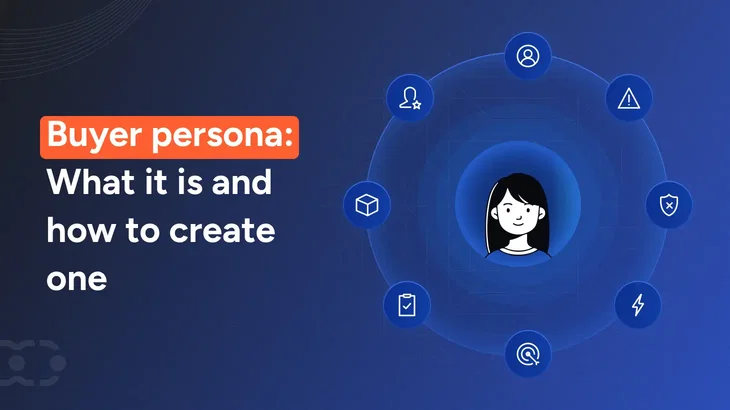
The buyer persona is a research-based representation of a target customer. It combines real customer data with insights about goals, pain points, motivations, behavior patterns, preferred channels, and buying decisions so teams can create more relevant marketing, sales, product, and customer experiences.
A persona represents patterns across multiple people. A name, photo, or short biography may make it memorable, but evidence makes it reliable.
Buyer persona, customer persona, and user persona are related but can serve different purposes:
- A buyer persona focuses on how and why someone becomes involved in a purchase.
- A customer persona may also cover onboarding, service, and the post-purchase experience.
- A user persona focuses on how someone uses a product, even if another person chose or paid for it.
The roles may belong to one person in a simple purchase or several people in a complex one.
Why are buyer personas important?
Buyer personas help teams replace assumptions with a shared understanding of the customer. That understanding improves:
The key benefits include:
- Clearer targeting: Marketing teams can focus on the people most likely to care about a specific problem.
- More relevant content: Writers can address real questions, pain points, and decision criteria.
- Better sales conversations: Sales reps can prepare for each buyer’s goals, objections, and level of influence.
- Stronger alignment: Marketing and sales teams can use the same customer language and qualification signals.
- Better product decisions: Product teams can connect requested features to the needs of valuable customer groups.
Buyer personas help only when they change a decision. If your marketing campaigns, sales strategies, or product priorities remain exactly the same after creating them, the personas are probably too generic.
How do B2B and B2C buyer personas differ?
B2B and B2C personas follow the same research principles, but the buying context changes.
A B2C persona may emphasize personal goals, lifestyle, convenience, price sensitivity, emotional benefits, and individual research habits.
A B2B persona gives more weight to professional outcomes, company context, business risk, budget, technical requirements, approval processes, and the person’s role in a buying group.
One B2B persona rarely explains an entire purchase. Users may value usability, department leaders may focus on outcomes, IT may assess integrations and security, and finance may question cost.
Forrester’s 2026 business-buying research found that a typical decision includes 13 internal stakeholders and nine external influencers. Your buying group may be smaller, but the finding shows why one generic “decision-maker” persona is rarely enough for complex purchases.
What should a buyer persona include?
Include details that help someone understand the customer or make a better decision:
- Customer context: Relevant role, life stage, company type, use case, or situation.
- Primary goal: The outcome the person wants.
- Pain points: Problems, costs, frustrations, or risks blocking that goal.
- Motivation: Why solving the problem matters.
- Buying trigger: The event that starts an active search.
- Decision criteria: The factors used to compare options.
- Objections: Concerns that may delay or stop the purchase.
- Research behavior: Trusted sources, channels, and content formats.
- Buying role: User, champion, influencer, evaluator, approver, blocker, or decision-maker.
- Customer language: Phrases from interviews, calls, reviews, or feedback.
- Recommended actions: What teams should do differently.
- Evidence: The source and review date for important claims.
Include demographics such as age, income, gender, location, or family status only when they influence the need, behavior, channel, or purchase. Irrelevant detail makes the important information harder to find and can reinforce stereotypes.
Nielsen Norman Group applies a similar principle in its guidance on research-based personas: a persona detail should serve a practical purpose.
How to create a buyer persona
Strong persona creation combines market research, buyer persona research, customer data, and observed behavior. Start with a specific business decision, gather evidence from several sources, identify repeated patterns, and validate the finished persona with people who regularly interact with customers.
1. Define what you need to understand
Start with the product, segment, or buying decision you want to improve. “Why do demand generation leaders replace their marketing automation platform?” produces better research than “Who is our ideal customer?”
Clarify how the persona will be used. Marketing strategy, sales, and product decisions need different information.
2. Gather customer data
Use multiple sources so one channel does not shape the persona. Consider records from your CRM database, website and product analytics, customer surveys, reviews, support conversations, sales calls, closed-won and closed-lost deals, social media discussions, and customer feedback.
Web analytics can show what people viewed or downloaded, but they rarely explain why. Combine quantitative data points with qualitative research before drawing conclusions.
3. Interview customers and buyers
Interview existing customers, recent buyers, lost prospects, and people who chose not to act. Their answers reveal motivations that dashboards cannot capture.
Ask open questions:
- What changed before you started looking for a solution?
- What problem were you trying to solve?
- How did you research your options?
- Who else influenced the decision?
- Which criteria mattered most?
- What nearly stopped you from moving forward?
Focus groups can help explore shared language, while one-to-one interviews usually make it easier to discuss internal objections, risks, or disagreements honestly. Choose the format that encourages honest answers.
4. Find meaningful patterns
Analyze customer feedback, then use customer segmentation to group people by patterns that change your approach, such as goals, buying triggers, pain points, evaluation methods, objections, knowledge, or buying roles. Do not create buyer personas for every difference.
Two job titles can share a persona when they buy similarly, while one title may need separate personas when motivations or use cases change.
5. Build the persona
Turn the strongest patterns into a clear, scannable profile. Give each claim an evidence source and mark uncertain details for further research.
AI can summarize transcripts, organize customer data, and suggest patterns. It should not invent motivations or replace research.
6. Validate and update it
Review the draft with customer-facing teams and compare it with current customer interactions. Remove details that no one can verify or use.
Review personas quarterly and update them when markets, customer needs, products, competitors, or buying processes change. Accurate buyer personas should evolve with the evidence.
Buyer persona templates
A simple buyer persona template should make research easier to use, not encourage fictional detail.
Keep the profile short enough to scan during campaign planning, content creation, sales preparation, or product discussions. Readers should see the buyer and the next action quickly.
Persona name:
Customer or company context:
Job title or buying role:
Primary goals:
Key pain points:
Buying trigger:
Motivations:
Decision criteria:
Common objections:
Preferred channels and trusted sources:
Other people involved:
Relevant customer quotes:
Marketing and sales actions:
Evidence sources:
Last reviewed: |
Create detailed buyer personas only after completing the research. Creating buyer personas from a blank template often turns internal opinions into polished assumptions.
Turn your research into a buyer persona
Organize validated customer insights into clear, actionable profiles with Salesmate’s free buyer persona templates.
Buyer persona examples
These examples are illustrative. They show how persona insight should lead to action.
| Persona element | B2B example: Demand generation Dana | B2C example: Busy beginner Alex |
|---|
| Context | Leads demand generation at a growing software company, struggling with disconnected campaign and pipeline data. | Wants to exercise at home but struggles to follow a consistent plan |
| Goal | Prove campaign impact and improve lead follow-up | Build a realistic fitness routine |
| Pain points | Weak attribution, slow handoffs, and limited pipeline visibility | Limited time, uncertainty about form, and intimidating programs |
| Trigger | Leadership asks marketing to prove pipeline impact | A schedule change makes gym visits impractical |
| Decision criteria | Automation, reporting, integration, adoption, and time to value | Beginner guidance, flexibility, price, progress tracking, and cancellation terms |
| Objection | “We cannot spend months learning another platform.” | “I will probably stop using it after a few weeks.” |
| Useful response | Show campaign-to-pipeline visibility and address implementation early | Offer short sample workouts, flexible plans, and beginner-friendly guidance |
Notice that neither example includes hobbies or unnecessary demographics. Add those details only when research shows they affect the decision.
What is a negative buyer persona?
A negative buyer persona describes people or customers who are unlikely to benefit from your solution or create a sustainable customer relationship.
Use evidence such as incompatible requirements, unsuitable budgets, low adoption, repeated early churn, or a use case your product does not support. The purpose is to identify a fit problem, not stereotype a group.
Do not exclude people based on protected characteristics, seniority, skepticism, or negotiation style.
How many buyer personas should you create?
There is no universal number. Create enough to represent meaningful differences in goals, triggers, buying behavior, use cases, or decision roles, but not so many that teams cannot use them.
Every persona should answer:
- How is this group meaningfully different?
- What will we do differently?
- What evidence supports the distinction?
Merge personas when the response is the same. Split one only when the combined profile hides a strategically important difference.
How to use and measure buyer personas
Connect persona insights to relevant customer journey stages:
| Persona insight | Practical use |
|---|
| Goal or pain point | Shape positioning, content topics, and discovery questions |
| Buying trigger | Time outreach around a relevant event |
| Research question | Create an article, video, guide, webinar, or tool |
| Decision criterion | Provide comparisons, demonstrations, or case studies |
| Objection | Address risk before it delays the decision |
| Buying role | Adapt the message to the person’s responsibilities |
Use customer journey mapping to identify what each persona needs at different touchpoints. Personas can also improve lead nurturing, sales conversations, onboarding, and product education.
Measure the outcome connected to the action, such as:
- Engagement from the intended audience
- Content-assisted conversions
- Lead acceptance and opportunity conversion
- Objection frequency and sales cycle length
- Product activation, retention, or expansion
If validated persona signals influence qualification, use them carefully in automated lead scoring. A persona label should affect a score only when evidence shows it predicts fit or intent.
Common buyer persona mistakes
Avoid these mistakes:
- Building personas from internal assumptions: Treat team opinions as hypotheses and verify them with customers.
- Confusing an ICP with a persona: An Ideal Customer Profile identifies the right customer or account; a persona explains the people involved.
- Relying on demographics: Group buyers by differences that change your response.
- Interviewing only happy customers: Lost buyers and former customers reveal friction and poor fit.
- Creating one persona per job title: Titles alone do not explain motivation or behavior.
- Inventing precision: Record evidence and confidence levels instead of using unsupported quotes or statistics.
- Failing to activate the persona: Connect insights to campaigns, conversations, product decisions, and workflows.
- Never updating it: Review personas when customer behavior, markets, products, or buying processes change.
Turn persona insights into action
Connect customer data, segments, marketing journeys, and sales follow-ups in Salesmate for a more consistent customer experience.
Conclusion
The best buyer persona is not the most detailed. It is the one that helps your team recognize an important customer pattern and respond more effectively.
Start with one decision, research real customers, identify repeated evidence, and connect every insight to an action. Then test and refine what you believe.
Frequently asked questions
1. What is the difference between a buyer persona and a target audience?
A target audience is a broad group you want to reach, such as marketing leaders at B2B software companies. A buyer persona defines a recognizable type of person within that audience, including their goals, pain points, motivations, behavior, buying role, and decision criteria.
2. What is the difference between a buyer persona and an ICP?
An ideal customer profile describes the type of company that is most likely to benefit from your solution. A buyer persona describes the people involved inside those companies. The ICP guides account targeting, while personas guide messaging, content, qualification, and sales conversations.
3. Can a buyer persona be based on one customer?
One customer can provide useful clues but cannot prove a wider pattern. Build personas from several data sources and interviews, then look for repeated behaviors, goals, barriers, and decision criteria. Label insights as provisional until additional buyer persona research confirms them.
4. How often should buyer personas be updated?
Review buyer personas quarterly and update them when new evidence changes how your team should act. Product launches, market changes, new customer segments, changing regulations, or shifts in the buying process may require an earlier update. Do not change them without evidence.
5. Can AI create a buyer persona?
AI can organize research, summarize interviews, analyze language, and identify possible patterns. It cannot replace direct data collection or customer interviews. Treat AI-generated insights as hypotheses, verify them against real customer evidence, and require human review before using them in marketing or sales decisions.





![15 Best follow up email templates [With best examples]](/mm-images/follow-up-email-template-iquligf6.webp?width=295 "Follow up email template")
Key takeaways
Think about the last time your team used a buyer persona before launching a campaign or speaking with a prospect. Did it help them make a better decision, or was it just another document collecting dust?
Knowing that your ideal customer is “38 years old, works in marketing, and wants to grow revenue” does not explain what triggers them to search for a solution, what challenges slow them down, or why they choose one vendor over another.
A useful buyer persona goes beyond demographics. It explains what customers want to achieve, what prevents progress, how they evaluate their options, and what gives them enough confidence to make a purchase.
This guide will show you how to create a research-backed buyer persona that your marketing, sales, product, and customer success teams can actually use.
What is a buyer persona?
The buyer persona is a research-based representation of a target customer. It combines real customer data with insights about goals, pain points, motivations, behavior patterns, preferred channels, and buying decisions so teams can create more relevant marketing, sales, product, and customer experiences.
A persona represents patterns across multiple people. A name, photo, or short biography may make it memorable, but evidence makes it reliable.
Buyer persona, customer persona, and user persona are related but can serve different purposes:
The roles may belong to one person in a simple purchase or several people in a complex one.
Why are buyer personas important?
Buyer personas help teams replace assumptions with a shared understanding of the customer. That understanding improves:
The key benefits include:
Buyer personas help only when they change a decision. If your marketing campaigns, sales strategies, or product priorities remain exactly the same after creating them, the personas are probably too generic.
How do B2B and B2C buyer personas differ?
B2B and B2C personas follow the same research principles, but the buying context changes.
A B2C persona may emphasize personal goals, lifestyle, convenience, price sensitivity, emotional benefits, and individual research habits.
A B2B persona gives more weight to professional outcomes, company context, business risk, budget, technical requirements, approval processes, and the person’s role in a buying group.
One B2B persona rarely explains an entire purchase. Users may value usability, department leaders may focus on outcomes, IT may assess integrations and security, and finance may question cost.
Forrester’s 2026 business-buying research found that a typical decision includes 13 internal stakeholders and nine external influencers. Your buying group may be smaller, but the finding shows why one generic “decision-maker” persona is rarely enough for complex purchases.
What should a buyer persona include?
Include details that help someone understand the customer or make a better decision:
Include demographics such as age, income, gender, location, or family status only when they influence the need, behavior, channel, or purchase. Irrelevant detail makes the important information harder to find and can reinforce stereotypes.
Nielsen Norman Group applies a similar principle in its guidance on research-based personas: a persona detail should serve a practical purpose.
How to create a buyer persona
Strong persona creation combines market research, buyer persona research, customer data, and observed behavior. Start with a specific business decision, gather evidence from several sources, identify repeated patterns, and validate the finished persona with people who regularly interact with customers.
1. Define what you need to understand
Start with the product, segment, or buying decision you want to improve. “Why do demand generation leaders replace their marketing automation platform?” produces better research than “Who is our ideal customer?”
Clarify how the persona will be used. Marketing strategy, sales, and product decisions need different information.
2. Gather customer data
Use multiple sources so one channel does not shape the persona. Consider records from your CRM database, website and product analytics, customer surveys, reviews, support conversations, sales calls, closed-won and closed-lost deals, social media discussions, and customer feedback.
Web analytics can show what people viewed or downloaded, but they rarely explain why. Combine quantitative data points with qualitative research before drawing conclusions.
3. Interview customers and buyers
Interview existing customers, recent buyers, lost prospects, and people who chose not to act. Their answers reveal motivations that dashboards cannot capture.
Ask open questions:
Focus groups can help explore shared language, while one-to-one interviews usually make it easier to discuss internal objections, risks, or disagreements honestly. Choose the format that encourages honest answers.
4. Find meaningful patterns
Analyze customer feedback, then use customer segmentation to group people by patterns that change your approach, such as goals, buying triggers, pain points, evaluation methods, objections, knowledge, or buying roles. Do not create buyer personas for every difference.
Two job titles can share a persona when they buy similarly, while one title may need separate personas when motivations or use cases change.
5. Build the persona
Turn the strongest patterns into a clear, scannable profile. Give each claim an evidence source and mark uncertain details for further research.
AI can summarize transcripts, organize customer data, and suggest patterns. It should not invent motivations or replace research.
6. Validate and update it
Review the draft with customer-facing teams and compare it with current customer interactions. Remove details that no one can verify or use.
Review personas quarterly and update them when markets, customer needs, products, competitors, or buying processes change. Accurate buyer personas should evolve with the evidence.
Buyer persona templates
A simple buyer persona template should make research easier to use, not encourage fictional detail.
Keep the profile short enough to scan during campaign planning, content creation, sales preparation, or product discussions. Readers should see the buyer and the next action quickly.
Persona name:
Customer or company context:
Job title or buying role:
Primary goals:
Key pain points:
Buying trigger:
Motivations:
Decision criteria:
Common objections:
Preferred channels and trusted sources:
Other people involved:
Relevant customer quotes:
Marketing and sales actions:
Evidence sources:
Last reviewed:
Create detailed buyer personas only after completing the research. Creating buyer personas from a blank template often turns internal opinions into polished assumptions.
Turn your research into a buyer persona
Organize validated customer insights into clear, actionable profiles with Salesmate’s free buyer persona templates.
Buyer persona examples
These examples are illustrative. They show how persona insight should lead to action.
Notice that neither example includes hobbies or unnecessary demographics. Add those details only when research shows they affect the decision.
What is a negative buyer persona?
A negative buyer persona describes people or customers who are unlikely to benefit from your solution or create a sustainable customer relationship.
Use evidence such as incompatible requirements, unsuitable budgets, low adoption, repeated early churn, or a use case your product does not support. The purpose is to identify a fit problem, not stereotype a group.
Do not exclude people based on protected characteristics, seniority, skepticism, or negotiation style.
How many buyer personas should you create?
There is no universal number. Create enough to represent meaningful differences in goals, triggers, buying behavior, use cases, or decision roles, but not so many that teams cannot use them.
Every persona should answer:
Merge personas when the response is the same. Split one only when the combined profile hides a strategically important difference.
How to use and measure buyer personas
Connect persona insights to relevant customer journey stages:
Use customer journey mapping to identify what each persona needs at different touchpoints. Personas can also improve lead nurturing, sales conversations, onboarding, and product education.
Measure the outcome connected to the action, such as:
If validated persona signals influence qualification, use them carefully in automated lead scoring. A persona label should affect a score only when evidence shows it predicts fit or intent.
Common buyer persona mistakes
Avoid these mistakes:
Turn persona insights into action
Connect customer data, segments, marketing journeys, and sales follow-ups in Salesmate for a more consistent customer experience.
Conclusion
The best buyer persona is not the most detailed. It is the one that helps your team recognize an important customer pattern and respond more effectively.
Start with one decision, research real customers, identify repeated evidence, and connect every insight to an action. Then test and refine what you believe.
Frequently asked questions
1. What is the difference between a buyer persona and a target audience?
A target audience is a broad group you want to reach, such as marketing leaders at B2B software companies. A buyer persona defines a recognizable type of person within that audience, including their goals, pain points, motivations, behavior, buying role, and decision criteria.
2. What is the difference between a buyer persona and an ICP?
An ideal customer profile describes the type of company that is most likely to benefit from your solution. A buyer persona describes the people involved inside those companies. The ICP guides account targeting, while personas guide messaging, content, qualification, and sales conversations.
3. Can a buyer persona be based on one customer?
One customer can provide useful clues but cannot prove a wider pattern. Build personas from several data sources and interviews, then look for repeated behaviors, goals, barriers, and decision criteria. Label insights as provisional until additional buyer persona research confirms them.
4. How often should buyer personas be updated?
Review buyer personas quarterly and update them when new evidence changes how your team should act. Product launches, market changes, new customer segments, changing regulations, or shifts in the buying process may require an earlier update. Do not change them without evidence.
5. Can AI create a buyer persona?
AI can organize research, summarize interviews, analyze language, and identify possible patterns. It cannot replace direct data collection or customer interviews. Treat AI-generated insights as hypotheses, verify them against real customer evidence, and require human review before using them in marketing or sales decisions.
Krish Doshi
SEO ExecutiveKrish Doshi is an SEO Specialist and content enthusiast at Salesmate, focused on optimizing content and driving digital growth. When he’s not working, he enjoys exploring new technologies and trends in digital marketing.